What Happens on Friday Night in an Orthodox Jewish Home?
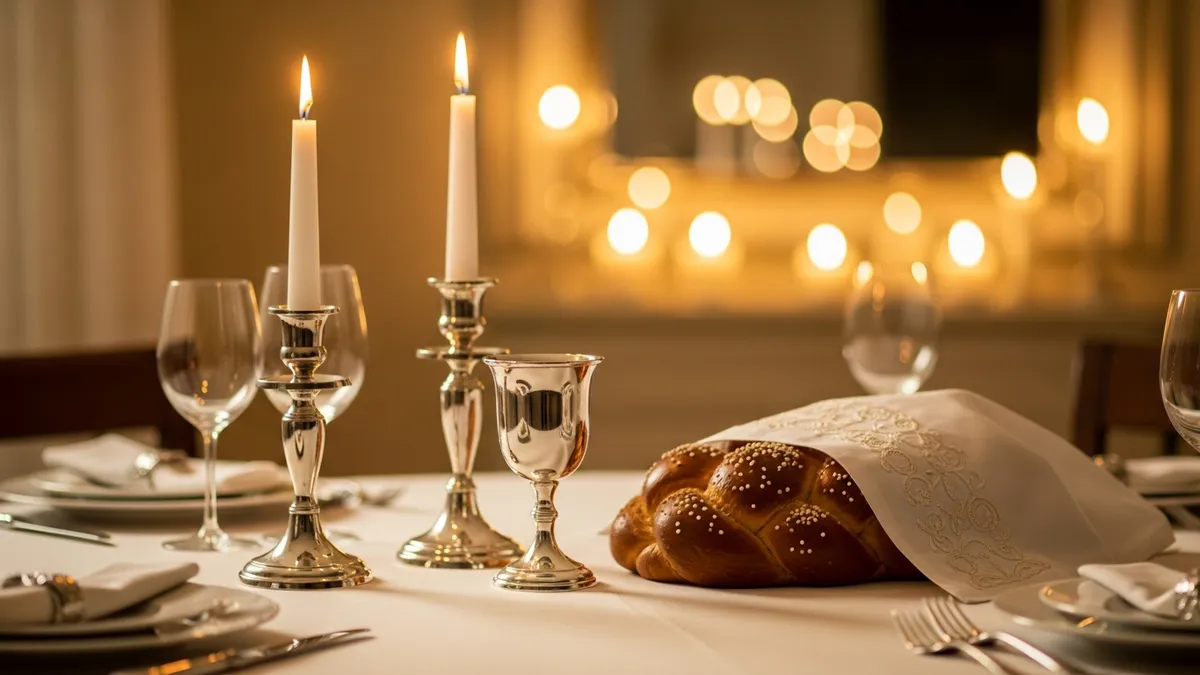
The transition from weekday chaos to Shabbat peace is the most beautiful thing in Jewish life. Here's what actually happens, hour by hour, from an insider.
Quick Answer
Friday afternoon: intense cooking and cleaning. Before sunset: candle lighting (the moment Shabbat begins). Friday evening: synagogue, then a multi-course dinner with wine blessings, challah, singing, conversation, and guests — lasting 2-3 hours. Then: quiet. No phones, no TV, no noise. The house is peaceful in a way that never happens the rest of the week.
Friday in my house has two halves. The first half is chaos. The second half is the most peaceful experience of the entire week. The dividing line is a match, two candles, and the minutes just before sunset.
Friday Afternoon: The Rush
The house transforms — the same rooms from my room-by-room tour of an Orthodox home get scrubbed, set, and dressed for their weekly best. Starting Thursday night (or Wednesday, for ambitious cooks), the preparation begins:
- Cooking: Challah is braided. Chicken is roasted. Soup simmers. Kugel bakes. Salads are chopped. Desserts are assembled. Every dish for Friday night dinner AND Saturday lunch must be ready before sunset — no cooking allowed on Shabbat.
- Cleaning: The house is cleaned. Floors swept, counters cleared, bathrooms scrubbed. Not because guests are coming (though they often are), but because Shabbat deserves a clean house.
- Table setting: White tablecloth. The good dishes. Wine glasses. Challah board with a cover. Two candlesticks (or more). The table transforms from a weekday mess to something that looks like a magazine cover.
- Personal preparation: Everyone showers and changes into Shabbat clothes — nicer than weekday, not quite formal. Children put on their "Shabbat best."
The last hour is intense. Timers are set for lights. The blech or hot plate is turned on. Final phone calls are made. The oven temperature is adjusted. Shower. Dress. Deep breath.
Candle Lighting
Shortly before sunset — eighteen minutes before in most communities, though Jerusalem lights forty minutes early and other cities follow their own custom — the woman of the house lights candles: typically two, though some women light additional candles (one for each child, or seven, or other customs).
She strikes the match. She lights the candles. She draws the light toward her three times with her hands, covers her eyes, and says the blessing: "Blessed are You, Lord our G-d, King of the Universe, who has sanctified us with His commandments and commanded us to kindle the Shabbat candles."
Then silence. Her hands still over her eyes. She adds personal prayers — for her family, her children, her health, anything weighing on her heart. This is considered an especially auspicious time for personal prayer.
She opens her eyes. Shabbat has begun.
The phone goes into a drawer. The laptop closes. The house crosses a threshold that is invisible but absolute.
Synagogue
Men and older boys walk to synagogue for Kabbalat Shabbat (Welcoming the Sabbath) and Maariv (evening prayers). The service takes 30-45 minutes. The opening song — Lecha Dodi — welcomes Shabbat as a bride. At the final verse, the entire congregation turns to face the door, as if greeting her entrance.
Women may attend synagogue or stay home with younger children. In my house, I light candles, settle the little ones, and enjoy the first quiet minutes of the week. The silence after candle lighting — before the family returns from shul — is the best silence.
Friday Night Dinner
The family returns from synagogue. "Good Shabbos!" Everyone gathers around the table.
The sequence:
- Shalom Aleichem — a song welcoming the angels who accompany each family home from synagogue
- Eishet Chayil — the husband sings Proverbs 31 ("A Woman of Valor") to his wife
- Blessing the children — each child comes to the father. He places his hands on their head and blesses them: "May G-d make you like Ephraim and Menashe" (for boys) or "like Sarah, Rivka, Rachel, and Leah" (for girls)
- Kiddush — the father lifts a cup of wine and recites the sanctification of Shabbat. Everyone drinks.
- Hand-washing — everyone washes with a two-handled cup, says a blessing, and is silent until the challah is eaten
- Challah — the father says a blessing over two braided loaves, tears or cuts them, dips in salt, and distributes pieces. Now the meal begins.
The food:
- Fish course (gefilte fish, salmon, or sushi-grade tuna)
- Soup (chicken soup with matzah balls — the iconic course)
- Main course (roast chicken, brisket, lamb, or all three)
- Side dishes (kugel, roasted vegetables, Israeli salad)
- Dessert (pareve cake, fruit, cookies)
Between courses:
- Zemirot (Shabbat table songs) — traditional melodies, some hundreds of years old, some modern. The whole family sings. Some tables are quiet and contemplative. Others are full-volume concerts.
- Dvar Torah — someone shares a thought on the weekly Torah portion. Could be the father, a guest, a child who prepared something at school.
- Conversation — no phones means actual talking. About the week, about ideas, about what is happening in the community. Guests are drawn in. Debates happen. Stories are told.
Duration: 2-3 hours
Friday night dinner is not a quick meal. It is the centerpiece of the week. Rushing it would defeat the purpose.
After Dinner
Grace after meals (birkat hamazon). Then — quiet. Some families read. Some talk. Children play board games or fall asleep on the couch. There is nowhere to be, nothing to do, no screen pulling attention.
In summer, when Shabbat starts late (8 PM or later), dinner might end at 11 PM. In winter, when it starts at 4:30, dinner ends by 7 and the evening stretches peacefully.
We go to bed knowing that tomorrow — Saturday — will be the same unhurried rhythm. Synagogue in the morning. Lunch with friends. Afternoon rest. No alarms, no obligations, no urgency.
What It Feels Like
There is a word in Hebrew — menucha — that means something deeper than rest. It is not the absence of activity. It is the presence of peace. Friday night is when menucha arrives.
The candles flicker. The wine is poured. The children are blessed. The food is warm and plentiful. The table is full of people you love. And no one — not your boss, not your phone, not the news, not the world — can reach you.
That is Friday night.
I'm an Orthodox Jewish woman from Brooklyn. I can't speak for every Orthodox Jew — when I write outside my experience, I say so.
Shabbat — The Jewish Day of Rest Explained
Your First Shabbat Dinner — What to Expect as a Guest
What Is Challah? The Braided Bread of Shabbat
What Is Kiddush? The Shabbat Blessing Over Wine
Want to experience a Jewish holiday yourself?
Virtual Seders, Rosh Hashanah dinners, and Chanukah candle-lightings are open to non-Jewish guests.
The Orthodox Insider
A new letter every Thursday, before Shabbos — plus an instant download of “10 Things Everyone Gets Wrong About Orthodox Jews” when you subscribe.
No spam, unsubscribe anytime.