What Is a Sukkah? The Festival Booth of Sukkot Explained
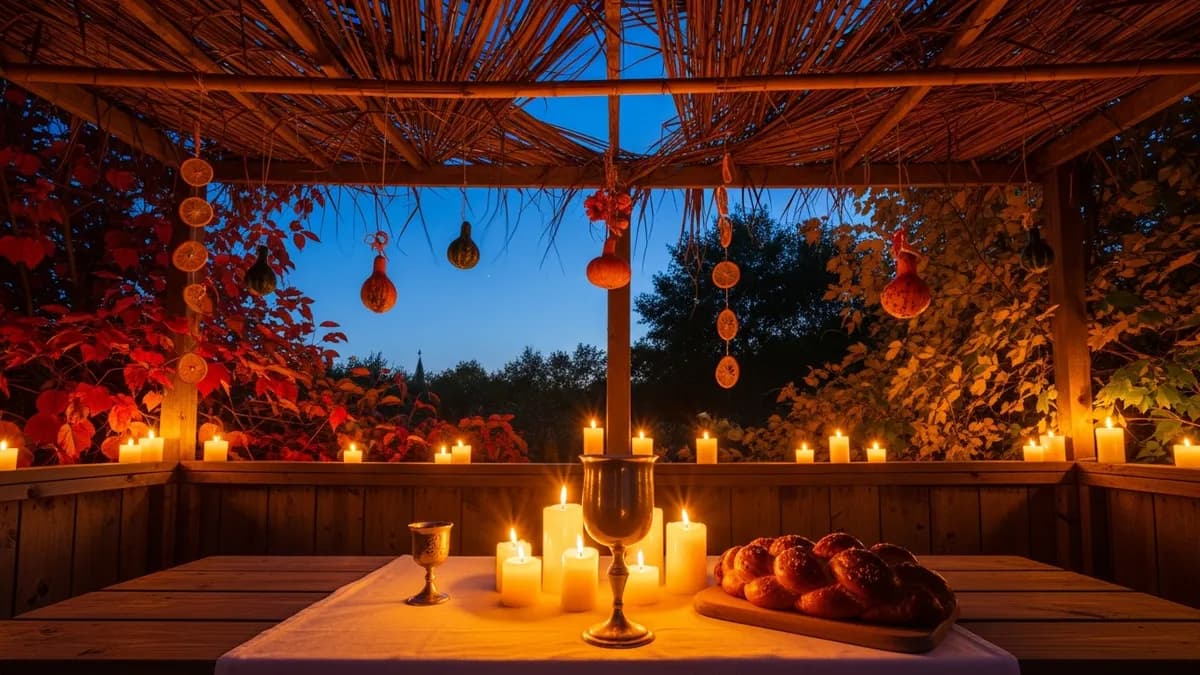
Learn about the sukkah — the temporary hut built for the Jewish holiday of Sukkot: its construction rules, spiritual meaning, and how families live in it.
Quick Answer
A sukkah is a temporary outdoor hut with a roof made of natural materials like branches or bamboo. Jews build and live in it for the seven-day holiday of Sukkot, eating meals and sometimes sleeping inside. It commemorates the clouds of glory that protected the Israelites in the desert after the Exodus.
Every fall, usually around September or October, something remarkable happens in Orthodox neighborhoods. The minute Yom Kippur ends, people go outside — some still in their white kittel from davening — and start hammering. By the next morning, temporary huts have appeared on balconies, in backyards, in driveways, and on sidewalks. Welcome to Sukkos.
A sukkah (Hebrew: סוכה, plural: sukkos or sukkot) is a temporary structure built for the holiday of Sukkot, which lasts seven days. (The day right after, Shemini Atzeret, is technically a separate festival, and in the diaspora it's followed by a ninth day, Simchat Torah.) The Torah commands: "You shall dwell in booths for seven days" — and we take that literally. For an entire week, the sukkah becomes our dining room, our living room, and for some, our bedroom.
How Is a Sukkah Built?
The sukkah has specific halachic requirements:
Walls — A sukkah must have at least two full walls and part of a third. Walls can be made of almost anything sturdy — wood, canvas, metal panels. Many people buy prefab sukkah kits that snap together. Others build from scratch. My husband has strong opinions about his sukkah design. Very strong opinions.
Schach (roof covering) — This is the most important part. The roof must be made of natural, detached materials that grew from the ground — branches, bamboo mats, corn stalks, palm fronds. It must provide more shade than sunlight during the day, but you should be able to see the stars through it at night. This is not a sealed roof. Rain gets in. Wind gets in. That is the point.
Size — A sukkah must be at least 7 tefachim by 7 tefachim (roughly 28 by 28 inches) and no taller than 20 amos (about 30 feet). Most family sukkos are much larger — big enough for a table, chairs, and guests.
Decorating the Sukkah
Decorating the sukkah is one of the most joyful parts of the holiday preparation. Families hang pictures, paper chains, plastic fruit, tinsel, and artwork the kids made in school. My children spend hours making decorations, and every single one goes up, regardless of artistic quality. We have had the same slightly lopsided paper chain hanging in our sukkah for six years now. Nobody is allowed to throw it away.
Some families go all out with themed decor. Others keep it simple. In Israel, you see sukkos decorated with real fruits and flowers. The minhag (custom) varies, but the common thread is joy — hiddur mitzvah, beautifying the commandment.
Living in the Sukkah
During Sukkos, we eat all our meals in the sukkah. Breakfast, lunch, dinner — everything happens outside, under the schach. In nice weather, it is wonderful. The October air is crisp, the stars are visible through the roof, and the whole family sits together in this temporary little house.
In not-nice weather... it is still wonderful, but also cold and sometimes wet. Rain comes through the schach. Wind blows the decorations sideways. I have served dinner in a coat and scarf more times than I would like. But there is something about it — the mild discomfort is part of the message. You are reminded that your real security does not come from four solid walls. It comes from Hashem.
Many men sleep in the sukkah, which is part of the mitzvah of "dwelling" in it. My husband and sons have a whole setup — sleeping bags, blankets, pillows. The kids think it is the greatest adventure. My husband thinks so too, until it rains at 3 AM.
The Deeper Meaning
The sukkah commemorates the Ananei HaKavod — the Clouds of Glory — that surrounded and protected the Jewish people during their 40 years in the desert after the Exodus from Egypt. But the sukkah also teaches something immediate and personal: that all our physical security is temporary. Our houses, our bank accounts, our carefully constructed lives — they are all, ultimately, sukkos. The only lasting shelter is our relationship with Hashem.
Sitting in the sukkah, exposed to the elements but surrounded by family and mitzvos, is one of the most grounding experiences in the Jewish calendar. It is a week of vulnerability that somehow makes you feel more secure, not less. The walls are temporary. The roof has holes. And somehow, everything feels exactly right.
I'm an Orthodox Jewish woman from Brooklyn. I can't speak for every Orthodox Jew — when I write outside my experience, I say so.
Sukkot: The Festival of Tabernacles
Jewish Holidays: The Complete Jewish Calendar Guide
Shabbat — The Jewish Day of Rest Explained
The Jewish High Holidays: Rosh Hashanah & Yom Kippur
Want to experience a Jewish holiday yourself?
Virtual Seders, Rosh Hashanah dinners, and Chanukah candle-lightings are open to non-Jewish guests.
The Orthodox Insider
A new letter every Thursday, before Shabbos — plus an instant download of “10 Things Everyone Gets Wrong About Orthodox Jews” when you subscribe.
No spam, unsubscribe anytime.