Bikur Cholim: How Orthodox Jews Care for the Sick
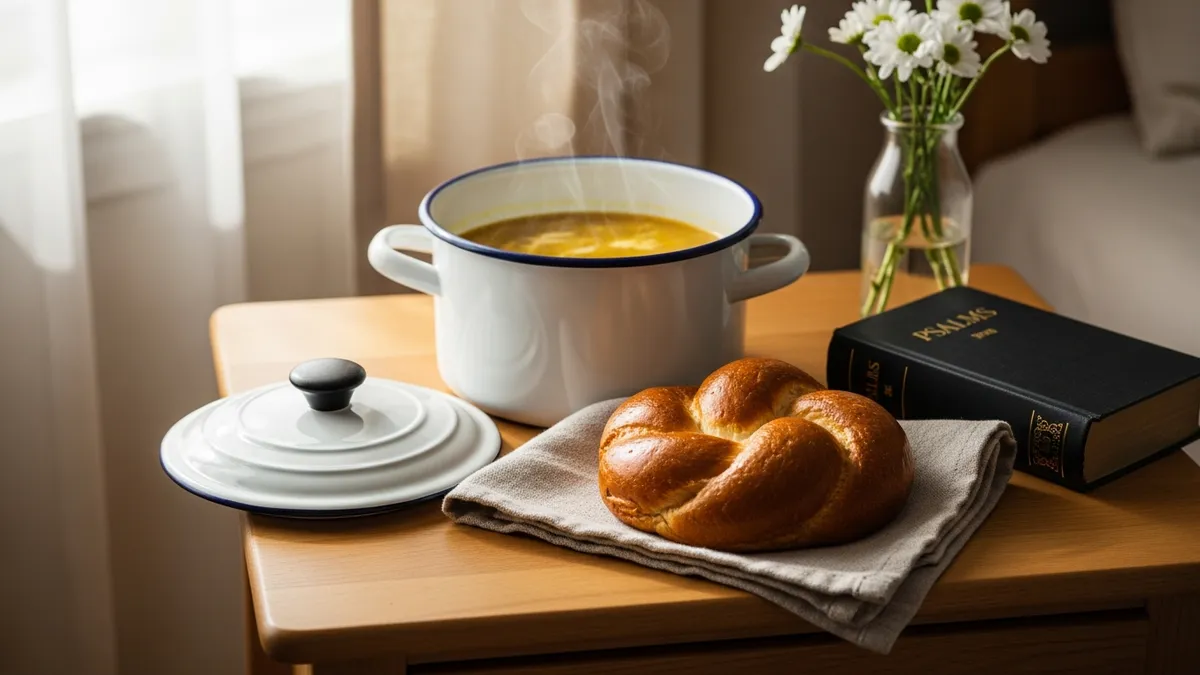
Bikur cholim — the Jewish mitzvah of visiting the sick — explained: its Torah sources, what it looks like in practice, and who runs it today.
Quick Answer
Bikur cholim is the Jewish obligation to visit and care for the sick. The Talmud teaches that a visitor removes one-sixtieth of the patient's suffering. In Orthodox communities it has grown into an entire infrastructure: organizations like Chesed 24/7 maintain kosher hospitality rooms inside hospitals, deliver hot meals, run free transportation, and house families near their patients over Shabbos.
There is a moment that every hospital family knows. The doctors have finished their rounds, the hallway goes quiet, and you realize you have been wearing the same clothes for two days and have not eaten a real meal since you arrived. It is precisely for that moment that Orthodox Jews built something most visitors to a New York hospital walk right past without noticing: the bikur cholim room.
But before I show you the rooms, let me explain the mitzvah behind them — because bikur cholim is one of the oldest obligations in Judaism, and one of the most beautiful.
What Bikur Cholim Means
Bikur cholim is Hebrew for "visiting the sick," and in Judaism it is not a nice gesture — it is a religious obligation. The Torah describes G-d Himself visiting Avraham as he recovered from his circumcision, and the Talmud derives from this that caring for the sick is one of the ways we are commanded to walk in G-d's ways. The Rambam (Maimonides) counts it within the great commandment to love your neighbor as yourself.
The Talmud makes two claims about bikur cholim that have always stayed with me. First, that a visitor takes away one-sixtieth of the patient's suffering — visiting does not just comfort the sick, it actively lightens their burden. Second, bikur cholim appears on the Talmud's short list of mitzvos whose reward a person enjoys in this world while the principal remains waiting in the next. Visiting the sick shares that list with honoring parents and making peace between people. That is the company it keeps.
A proper bikur cholim visit, in Jewish law, has three parts: you attend to the patient's practical needs, you give them the comfort of company, and you pray for their recovery. The visit without the prayer, the Talmud says, is incomplete. And the obligation applies to everyone — there is a famous story of Rabbi Akiva personally sweeping the floor of a sick student whom everyone else had forgotten, and declaring afterward: whoever does not visit the sick, it is as if he sheds blood.
From a Visit to an Infrastructure
Here is what makes the Orthodox world distinctive: we took a personal mitzvah and built institutions around it, the same way tzedakah grew from a coin in a pushka into free-loan societies and a gemach for everything imaginable.
Walk into many major hospitals in the New York area — Mount Sinai, Columbia Presbyterian, Memorial Sloan Kettering, Hackensack, and dozens of others — and somewhere in the building there is a room stocked with kosher food, coffee, grape juice and challah for Shabbos, siddurim, and a couch for the relative who refuses to leave. These rooms are maintained by bikur cholim organizations: volunteers restock them, donors fund them, and they are open to any Jew (and often any person) who needs them, around the clock.
The organizations behind these rooms do far more than stock shelves:
- Hot kosher meals delivered to patients and the families sitting with them — every day, in some hospitals twice a day
- Free transportation to and from hospitals, including wheelchair-accessible shuttles, so that visiting a spouse in the city does not depend on owning a car or affording weeks of parking
- Shabbos accommodations — apartments and guest rooms near hospitals, so a family can stay within walking distance of their patient without breaking Shabbos
- Medical guidance — many organizations quietly help families navigate referrals and find the right specialist
- Equipment loans — hospital beds, wheelchairs, oxygen concentrators, lent for free for as long as they are needed
The Organizations That Live This Mitzvah
A few names come up again and again when Jewish families talk about who was there for them during a hospital stay.
Chesed 24/7 is one of the largest of these organizations, and the name is literal — they operate around the clock, every day of the year. Chesed 24/7 maintains kosher hospitality rooms inside hospitals across New York and New Jersey, delivers thousands of fresh hot meals to patients and their families, runs free hospital transportation including wheelchair-accessible shuttles, and arranges Shabbos accommodations near hospitals so families never have to choose between Shabbos and being near their patient. They even publish a guide for families on how to manage Shabbos during a hospital stay. For a family suddenly thrown into a medical crisis, an organization like this is the difference between facing it alone and being carried through it.
If you're reading this because of a specific situation, these guides walk through exactly what to do: how to help when someone you love is in the hospital, getting kosher food in a hospital, giving tzedakah in the merit of a refuah shleima, sponsoring a kosher meal for a patient, giving in memory of someone or for a yahrtzeit, and directing your maaser to caring for the sick.
Satmar Bikur Cholim of Williamsburg is legendary in the chassidic world — it has been feeding patients and families in New York hospitals for decades, and its founders are credited with pioneering the modern bikur cholim room. Bikur Cholim of Queens, Lenox Hill Bikur Cholim in Manhattan, and Washington Heights Bikur Cholim each cover their neighborhoods' hospitals with rooms, meals, and volunteers. The Friendship House in Manhattan offers dozens of beds near Memorial Sloan Kettering, Cornell, and the Hospital for Special Surgery for out-of-town families facing long treatments.
None of these organizations checks your affiliation at the door. The chassidic volunteer restocking the room at Mount Sinai is doing it for whichever Jew walks in at 2 a.m. — and the coffee is usually there for the non-Jewish roommate's family too.
Looking for the organization nearest you — anywhere in the world? See The Worldwide Bikur Cholim Directory: 147 verified organizations, region by region, plus the phone-based networks that cover everywhere else. Readers outside America may want to start with my guide to bikur cholim in the UK and Europe, or the broader look at the communities sustaining this mitzvah worldwide.
Why People Give to Bikur Cholim
In the world of tzedakah, bikur cholim organizations hold a special place, and donors tend to be people who were once on the receiving end. Ask someone why they give monthly to a bikur cholim organization and you will almost always hear a story: the Shabbos apartment that appeared when their father was in the ICU, the hot soup that arrived on the worst night of their lives, the volunteer driver who came at midnight.
It is also one of the places where the Rambam's highest ideals of giving play out quietly. The family eating from the hospitality room rarely knows which donor stocked it. The donor never learns which families ate. Completely anonymous giving, exactly as the Rambam ranked it — happening every day in a hospital pantry.
The Mitzvah Is Still Personal
With all the organizations and infrastructure, Jewish law never transferred the obligation away from the individual. The organizations exist to do what one visitor cannot — be in thirty hospitals at once, on call all night — but they have not replaced the visit itself. The mitzvah is still fulfilled one bedside at a time: sit down, see what the patient needs, say something human, and before you leave, say a short prayer for them.
That is bikur cholim. The rooms, the shuttles, and the meals are what it looks like when a community decides that no one should ever be sick alone — and builds accordingly.
I'm an Orthodox Jewish woman from Brooklyn. I can't speak for every Orthodox Jew — when I write outside my experience, I say so.
What Is Tzedakah? Jewish Charity Is Not Optional
What Is a Gemach? Jewish Interest-Free Loans and Chesed
What Do Orthodox Jews Believe? Core Principles of Faith
Do Orthodox Jews Go to College?
Partway in, or just curious?
If you're in an interfaith relationship, have Jewish ancestry, or are quietly exploring deeper engagement, there's a separate page for you.
The Orthodox Insider
A new letter every Thursday, before Shabbos — plus an instant download of “10 Things Everyone Gets Wrong About Orthodox Jews” when you subscribe.
No spam, unsubscribe anytime.