Orthodox Jewish Hair: Payot, Beards, Wigs & Coverings
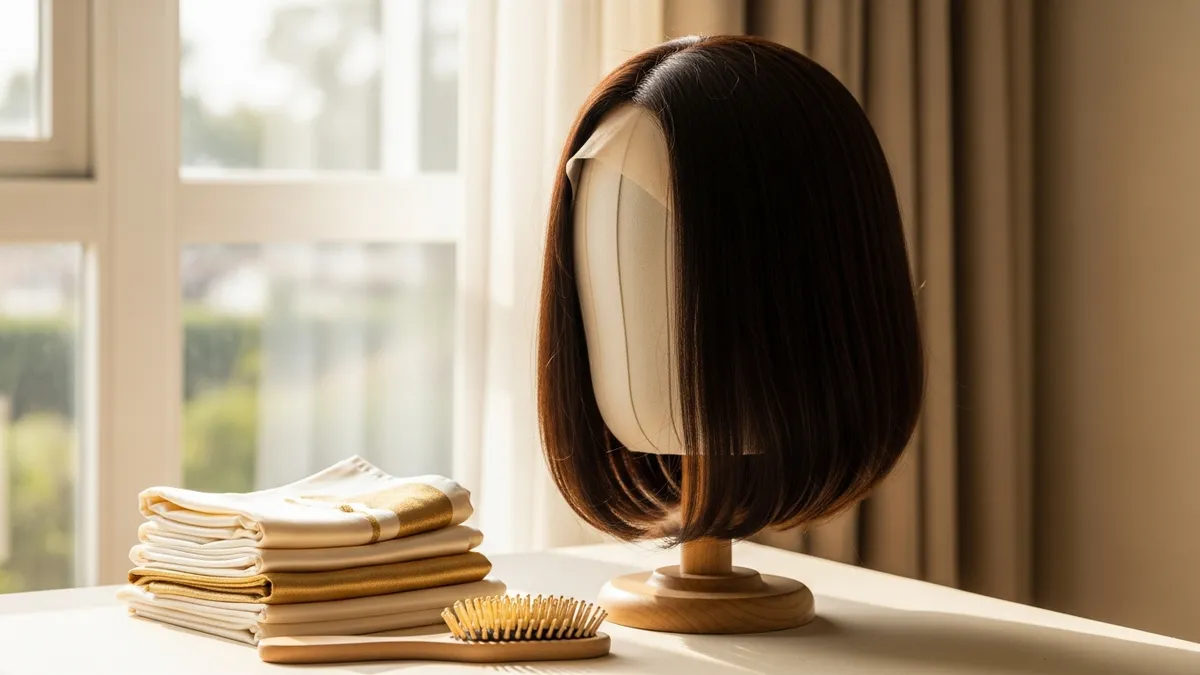
From sidecurls to sheitels, why Orthodox Jewish hair looks the way it does — the Torah sources, community differences, and the real story behind the wigs.
Quick Answer
Orthodox Jewish men grow sidelocks called payot from a Torah commandment not to 'round the corners of the head,' and many grow beards for religious reasons. Married Orthodox women cover their hair — using wigs, scarves, or hats — as a practice of modesty. The specific styles vary a great deal by community.
Hair might seem like a strange place to start when you want to understand Orthodox Jews. But honestly? Orthodox Jewish hair is one of the first things people notice, and it tells you a lot. The curls in front of the ears, the beards, the wigs, the scarves — none of it is random. Every bit of it connects to something real: a Torah commandment, a community tradition, a personal expression of who you are and what you stand for.
I wear a sheitel. My husband has a short beard and peyot that he tucks behind his ears. My sons have peyot from their upsherin at age three, and my daughters will cover their hair after they get married. Hair is not just hair in our world. Let me walk you through all of it.
Men's Hair: Payot (Sidelocks)
The Torah Source
The payot — those distinctive sidelocks — come from one verse in Leviticus (19:27): "Do not round the corners of your head, and do not destroy the edge of your beard."
The word for "corners" in Hebrew is pe'ah (plural: peyot). Jewish law interprets this as a prohibition against cutting the hair at the temples — the area between the forehead and the ear — completely down to the skin. The commandment sets a floor, not a ceiling. It tells men what they cannot do. It does not specify a length, a shape, or a style. That is why you see such enormous variety.
For a deeper dive into the halacha and the community differences, the article why Orthodox Jews have curls covers all of it. Here I want to give you the full picture alongside everything else.
How Different Communities Wear Them
Walk through any major Jewish neighborhood and you can read a man's community affiliation largely from his peyot. I find this endlessly interesting.
Hasidic men generally wear the longest and most visible payot. Hungarian and Galician Hasidic groups — Satmar, Vizhnitz — often grow long peyot that hang in spirals past the ears, sometimes reaching the shoulders. Some Hasidic groups wind their peyot into a tight twist and tuck them behind the ear or under the hat. Others — Belz is the familiar example — wrap them around the ear itself. Within Hasidic communities, long peyot carry spiritual significance beyond the minimum requirement — they are an act of beautifying the commandment, and the Kabbalistic tradition adds a mystical dimension to the temple area specifically.
Litvish/Yeshivish men (my husband's world) typically keep short peyot that blend with their sideburns. They fully observe the commandment — the temple hair is present and never shaved — but they do not emphasize length. You might not notice them unless you knew to look.
Yemenite Jews have their own ancient tradition: thin, delicate spiral peyot grown from a narrow strip of hair. They are among the most elegant-looking and are believed to preserve a very old way of observing this commandment.
Modern Orthodox men observe the commandment by simply never shaving the temple area. Their peyot look like ordinary sideburns to any outside observer.
Payot can be tucked behind the ears or under a hat — that is completely acceptable. The commandment is about not destroying the hair, not about displaying it prominently.
Men's Hair: Beards
The same verse in Leviticus that gives us payot also addresses the beard: "do not destroy the edge of your beard." Jewish law prohibits shaving the beard with a razor blade in the traditional sense. The deeper halachic discussion is about how a razor acts on hair versus how scissors or electric shavers act — and that discussion matters practically.
Most observant men grow beards, though the fullness varies by community. Hasidic men typically grow full, untrimmed beards. The Kabbalistic tradition, rooted in the Zohar and the teachings of the Ari (Rabbi Yitzchak Luria), assigns profound spiritual significance to every part of the beard — it is not just a halachic obligation but a spiritual channel. This is why some Hasidic men are especially careful not to cut or shape their beards at all.
In the Litvish and Yeshivish world, many men do trim or shape their beards using electric shavers. The halachic reasoning is that an electric shaver cuts hair by a scissoring action between two blades rather than by a razor against skin — and according to many halachic authorities, this means it does not violate the prohibition. So a Yeshivish man with a neat, trimmed beard is observing halacha just as his Hasidic neighbor with a flowing beard is.
Modern Orthodox men may keep shorter beards or be clean-shaven, relying on the electric shaver leniency or other halachic positions. The full halachic background is in why Orthodox Jews have beards.
Orthodox Jewish men can never shave at all.
Many use electric shavers, which most halachic authorities permit. The prohibition is specifically against a razor blade on the skin.
The Upsherin: A Boy's First Haircut
One of my favorite topics, because I have been through it more than once as a mother and it never gets old.
There is a custom in many Orthodox communities called the upsherin (in Yiddish; called chalake in Sephardic tradition). For the first three years of his life, a boy's hair is not cut. Then, when he turns three, the family gathers for a ceremony: everyone takes turns snipping a small piece of hair. But the payot area is left completely alone. It is the beginning — the first visible sign that this little boy is starting his journey of Torah observance.
The timing is not arbitrary. Age three is when Jewish children traditionally begin formal Torah learning. The upsherin marks the transition from pure babyhood to the first steps of Jewish education. It connects the outer appearance (the payot) to the inner life (Torah study) from the very beginning.
My youngest had his upsherin last year. He sat on his grandfather's lap with a chocolate bar in each hand, thoroughly unconcerned about the hair situation, while twenty family members lined up to take a snip. His little payot were left curling softly in front of his ears. He kept touching them afterward with this expression of profound suspicion, like he was deciding whether to approve. He has since become very proud of them.
For a full guide to the ceremony and what to expect, see what is an upsherin.
Women's Hair: Covering After Marriage
Now we get to my domain, and I have opinions.
Until she is married, an Orthodox Jewish woman wears her hair however she likes. I had very long hair before I got married. The covering begins at marriage, and it is specifically a married woman's obligation.
The halachic basis is the concept of dat Yehudit — the standards of Jewish modesty — under which a married woman's hair is considered ervah, a private matter reserved for her husband. Hair that was visible to everyone before marriage becomes, after marriage, something intimate. This is not about shame. It is about the idea that marriage creates a private sphere, and hair is part of that sphere.
What does she cover it with? This is where things get interesting, because there is a wide range.
Sheitels (Wigs)
A sheitel is a wig, and it is the covering of choice in most Ashkenazic Orthodox communities. I wear one. Mine looks like normal hair — because it is normal hair. High-quality sheitels today are made from real human hair and are styled, cut, and colored just like a natural head of hair. They can cost anywhere from a few hundred to several thousand dollars, and yes, the expensive ones look spectacular.
This leads to the famous question that outsiders always ask: "But if the wig looks better than her real hair, what is the point?" It is a fair question, and I will answer it honestly. The covering of married women's hair is about the status of the hair, not about looking less attractive. The hair becomes private; it is covered. What she puts on top is her business. A sheitel signals "I am a married woman observing the laws of modesty" regardless of how beautiful it looks. The act of covering is the point.
That said, there is ongoing discussion within Orthodox communities about sheitel standards — length, how natural it looks, and so on. Different communities hold different standards. In Hasidic communities, some women wear more modest sheitels that are clearly recognizable as wigs. In Yeshivish communities, more natural-looking sheitels are common. In stricter Haredi communities, some women do not wear sheitels at all and cover with scarves or hats only.
For the full story on sheitels — history, halacha, and the great sheitel debates — see why Orthodox Jews wear wigs.
Tichels and Mitpachot (Scarves)
A tichel is a headscarf, and it is an art form. The women I know who wrap tichels can do things with a piece of fabric that I genuinely cannot explain. Turbans, wraps, multi-fabric creations — some of them look like high fashion. Tichels are common in Sephardic communities, in some Hasidic communities (especially Breslov and certain Israeli groups), and among women who prefer them over sheitels for reasons of comfort or personal preference.
Hats
Hats are popular in Modern Orthodox communities and in many Yeshivish communities, often worn over the actual hair or over a thin under-covering. A snood (a fabric hat that covers all the hair) is also common for home wear. Many women wear a hat for Shabbat and a sheitel on weekdays, or switch between them depending on the occasion.
Community Differences
The range across communities is significant. A Satmar woman typically covers all her hair completely — often with a wig plus a hat on top, or a tichel, and in some Satmar subgroups, women do shave their heads under the covering (I will address this below). A Modern Orthodox woman might leave some hair showing at the hairline. A Sephardic woman may use a tichel. Litvish women often wear natural-looking sheitels. These are genuine differences in communal practice, not violations of each other's standards — different communities hold by different rulings.
Hasidic Jewish Hair
Hasidic Jewish hair is the most visually distinctive style in the Orthodox world: long, often curled peyot on men, full untrimmed beards, and — among married women — completely covered heads. If you have seen photos of Hasidic neighborhoods like Williamsburg or Boro Park, this is the look people usually picture.
On the men's side, Hasidic men generally grow the longest and most visible peyot in the Orthodox world, sometimes wound into spirals that hang past the ears or even to the shoulders. The full story behind those payot curls — the Torah source, the Kabbalistic meaning, why some tuck them away and some display them — gets its own article. The beards follow the same pattern: most Hasidic men leave them full and untrimmed, because the Kabbalistic tradition treats the beard as spiritually significant, not just a halachic obligation.
On the women's side, married Hasidic women cover their hair completely — a wig, a wig with a hat on top, or a tichel, depending on the community. And in certain Hungarian Hasidic groups, most famously a segment of Satmar, women take it one step further and shave their heads under the wig so that no natural hair is ever visible. That custom belongs to those specific communities; it is not a general Hasidic practice, and it is certainly not an Orthodox-wide one.
Common Questions People Ask
Do Orthodox Jewish women shave their heads?
Most do not. The vast majority of Orthodox women cover their natural hair with a wig, scarf, or hat. Shaving the head is the practice in one specific Hasidic custom, most associated with certain Hungarian Hasidic communities (including a segment of Satmar). The reasoning is that shaving ensures nothing of the woman's own hair is ever visible under or around the covering. This practice is not standard across Orthodoxy — it is specific to those communities and is not a universal Orthodox requirement. Most Orthodox women have full heads of hair under their coverings.
Why do some sheitels look more beautiful than the person's natural hair?
Because the halacha is about covering, not about appearing less attractive. The wig fulfills the obligation. Standards within communities vary — some hold by stricter standards for sheitel length and naturalness — but the basic halachic requirement is met by the act of covering itself.
Can you touch a man's payot?
This is a question my children's classmates ask constantly. The short answer is: there is no specific prohibition on someone touching another person's payot, but you also should not go around grabbing people's hair. Common courtesy applies. Within families, I have seen plenty of mothers straightening a son's peyot before school. The question people usually mean is whether the payot are religiously off-limits to touch — they are not, in that halachic sense.
Do all Orthodox men have visible curls?
No. As described above, Modern Orthodox and Litvish men may have payot that are indistinguishable from normal sideburns. The commandment requires not destroying the hair at the temples — it does not require long, visible curls. Long, visible curls are a Hasidic and Yemenite tradition, not a universal Orthodox requirement.
Do women cover their hair at home?
Standards vary by community and by the individual woman. Many women are more relaxed at home when only family is present. Some cover even at home. Some cover in front of their husbands, some do not. The halachic discussion is nuanced, and different authorities hold different positions. What I can tell you from personal experience is that every woman I know has her own home routine, and it varies a lot.
The Full Picture
What I want you to take away from all of this is that Orthodox Jewish hair practices are not arbitrary or decorative. The payot connect directly to a Torah verse that has been observed for thousands of years. The beard traditions blend halacha with Kabbalistic depth. The women's coverings are about the profound change that marriage creates — a shift in what is private and what is shared. The upsherin is a child's first step into Jewish identity.
The modest clothing guide covers how all of this fits into the broader system of tzniut — modesty — if you want the larger context. And if you are curious about how these customs look in practice across different communities, Hasidic Jews and orthodox Jewish clothing both go deeper.
For me personally, the sheitel is simply part of getting dressed in the morning. I have a good one, I take care of it, and on the mornings when I put it on in two minutes because I am running late to drop off a carful of children, I am grateful it exists. That is Orthodox Jewish hair in real life: meaningful, rooted in something ancient, and also just practical.
I'm an Orthodox Jewish woman from Brooklyn. I can't speak for every Orthodox Jew — when I write outside my experience, I say so.
Orthodox Jews: Who They Are and How They Live
Jew Curls (Peyot): Meaning and Why Orthodox Jews Wear Them
Why Do Orthodox Jews Wear Wigs — and What Is a Sheitel?
Why Do Orthodox Jews Have Beards?
There's more where this came from.
Orthodox Jewish dress touches on modesty, community identity, and religious law. The full tour covers it all.
The Orthodox Insider
A new letter every Thursday, before Shabbos — plus an instant download of “10 Things Everyone Gets Wrong About Orthodox Jews” when you subscribe.
No spam, unsubscribe anytime.