What to Wear to an Orthodox Jewish Wedding or Event
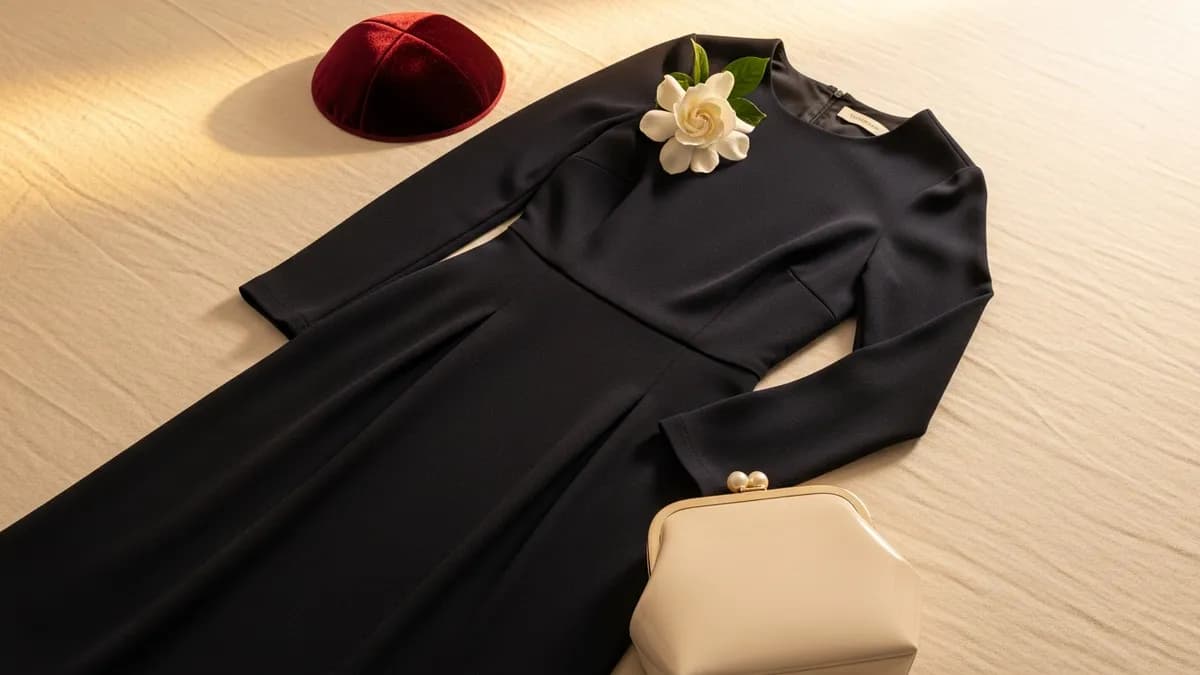
What to wear to an Orthodox Jewish wedding, bar mitzvah, or Shabbat dinner as a non-Jewish guest, plus what to avoid and what to expect.
Quick Answer
For Orthodox Jewish events, dress modestly: women should cover knees, elbows, and collarbone (a midi dress or skirt with a nice top works perfectly). Men should wear a suit or dress pants with a button-down shirt and will need a kippah (head covering) — usually provided at the door. Avoid anything low-cut, sleeveless, or above the knee. When in doubt, dress as you would for a conservative business event.
For an Orthodox Jewish wedding or event, women should wear modest clothing — knees, elbows, and collarbone covered — such as a midi dress or skirt with a long-sleeved blouse. Men should wear a suit or dress slacks with a button-down shirt and will need a kippah (head covering), which is almost always provided at the door. Think conservative and dressy, and you will be perfectly fine.
My friend Sara called me the night before her coworker's Orthodox wedding in a complete panic. "I have nothing to wear. Everything in my closet is either too short or too sleeveless or both. What do I do?" I talked her off the ledge, we figured out an outfit from what she already owned, and she had an amazing time. But she told me afterward, "I wish someone had just told me this stuff a week earlier."
Consider this your week-earlier conversation. If you have been invited to an Orthodox Jewish wedding, bar or bat mitzvah, Shabbat dinner, or any other Orthodox event, here is exactly what to wear — and what to expect when you get there.
The General Rule: Modest and Dressy
The single most important word is modest. In Orthodox settings, modesty (tznius) is a core value, and guests are expected to dress accordingly. This does not mean boring or frumpy — it means covered.
For women:
- Skirt or dress that covers the knees (even when sitting — so aim for midi length or longer)
- Sleeves that cover the elbows (three-quarter sleeves are perfect)
- Neckline that covers the collarbone (no plunging necklines, no strapless)
- Closed-toe shoes are not required, but they are a safe choice for more traditional events
What works beautifully: a wrap dress with sleeves, a midi skirt with a blouse, a tailored jumpsuit that covers everything (though in very traditional communities, pants on women are less common — a skirt is the safest bet). A pashmina or cardigan over a sleeveless dress is a classic solution that has saved many a guest outfit.
For men:
- Suit or dark dress pants with a button-down shirt and jacket. A tie is nice but not required for most events.
- A kippah (yarmulke/skullcap) — you will need one for any synagogue service and for most events. Do not worry about bringing one — there will almost always be a basket of extras at the entrance. Just put it on, and if it keeps sliding off (they do), a bobby pin works wonders. Nobody will judge you for your kippah technique.
By Event Type
Orthodox Jewish Wedding
Weddings are the most formal events. Think of it as a black-tie-adjacent dress code with modesty requirements.
The ceremony itself (under the chuppah) may be outdoors. The reception is often separate-seating — men and women sit on different sides with a mechitzah (divider) between them. This means you will be seated with people of the same gender, which is actually a great way to meet new people.
The dancing is separate too, and it is energetic. If you are a woman, wear shoes you can move in, because you will probably get pulled into a circle dance at some point. It is joyful and chaotic and wonderful, and you should absolutely join in even if you do not know the steps. Nobody does the steps perfectly. We are just spinning in circles and being happy.
One thing to know: if the wedding invitation says "6:00 PM," the ceremony may not actually start at 6:00 PM. Orthodox weddings often run on their own timeline. Bring patience and enjoy the cocktail hour.
Bar or Bat Mitzvah
A bar mitzvah (for boys) or bat mitzvah (for girls) is the coming-of-age ceremony at age 12 or 13. The dress code is similar to a wedding but slightly less formal.
For a Saturday morning bar mitzvah in the synagogue, women should dress modestly as described above. (If you are not Jewish and unsure whether you should even be in the sanctuary, relax — you do not need to be Jewish to sit in an Orthodox synagogue.) The service lasts 2–3 hours (yes, really — but there is usually a lunch afterward that makes it worthwhile). The bar mitzvah boy will read from the Torah, and at several points the congregation will sing and celebrate. Follow the lead of the people around you — when they stand, you stand; when they sit, you sit.
The party or reception that follows can range from a kiddush lunch in the synagogue hall to a full evening event. Dress for whichever one you are attending.
Shabbat Dinner
If someone invites you for Shabbat dinner, the dress code is "nice Shabbat clothes" — which translates to business casual or slightly dressier. Women: a skirt and nice top or a modest dress. Men: dress pants and a button-down shirt, kippah on.
The mood at a Shabbat dinner is warm and intimate. You will eat a lot. You will sing songs you do not know the words to (just hum along — everyone hums through the parts they do not remember). You will be asked questions about yourself because your host genuinely wants to know you. And you will leave thinking, "That was one of the nicest evenings I have had in a long time."
Jewish Funeral
Jewish funerals are somber and modest. Black or dark-colored clothing. Women: knee-length or longer skirt, covered arms, flat comfortable shoes (the cemetery ground is often uneven). Men: dark suit, kippah.
Do not bring flowers — this is not a Jewish custom for funerals. A card or a donation to a charity in the deceased's memory is more appropriate.
After the funeral, the family sits shiva (seven days of mourning) at home. When you visit, dress respectfully but you do not need to be in all black. Bring food if you can — but make sure it is kosher (look for the OU or other kosher symbol on packaged food, or ask). The family will appreciate your presence more than anything you bring.
Common Mistakes to Avoid
Wearing red to a wedding. Not technically forbidden, but in some Orthodox communities, bright red is considered immodest. Play it safe and go with navy, emerald, burgundy, or any other rich color.
Forgetting about the dancing. You are going to dance. Wear shoes that allow it. Leave the sky-high stilettos at home unless you are extremely practiced in them.
Bringing a non-kosher gift. If you want to bring a host gift (always a nice touch), make sure any food items are certified kosher. A bottle of kosher wine is a perfect choice. Flowers are lovely for Shabbat (bring them before Shabbat starts — they cannot be put in water on Shabbat in many households). A beautiful coffee-table book or candle is always safe.
Trying to shake hands with the opposite gender. At Orthodox events, follow the lead of the person you are greeting. If they do not extend their hand, just smile warmly and say hello. It is about personal boundaries, not rejection.
Taking photos on Shabbat. If the event is on a Saturday, do not pull out your phone for photos. No electronics on Shabbat — and this applies to guests too.
Common Questions
Can I wear pants (as a woman)? In Modern Orthodox settings, usually fine. In Hasidic or very traditional settings, a skirt is strongly preferred. When in doubt, choose a skirt.
Do I need to bring my own kippah? No. They are always provided for guests at synagogues and events. But if you own one you like, feel free to bring it.
What if I accidentally do something wrong? You will be fine. Orthodox communities are accustomed to hosting guests from different backgrounds, and people are generally warm and forgiving about minor etiquette mistakes. If you are unsure about something during the event, ask the person next to you — they will be happy to guide you.
Should I bring a gift? For a wedding or bar mitzvah, a monetary gift (check or cash in a card) is standard. The amount varies by your relationship to the family — your host can guide you if you ask. For a Shabbat dinner, a kosher wine, flowers (brought before Shabbat), or a small gift for the children is perfect.
What if I am not Jewish — is it still okay to attend? Absolutely. You were invited because the family wants you there. Come, eat, celebrate, and enjoy. You will be welcomed warmly.
I'm an Orthodox Jewish woman from Brooklyn. I can't speak for every Orthodox Jew — when I write outside my experience, I say so.
Jewish Wedding Traditions: A Guide to the Orthodox Ceremony
Bar & Bat Mitzvah: Meaning, Customs & What to Expect
Visiting an Orthodox Jewish Community: Etiquette Guide
Orthodox Jewish Clothing — Why They Dress That Way
Attending one of these in real life?
Weddings, bar mitzvahs, and other Jewish life events often include non-Jewish guests. If you want practical guest etiquette, ask.
The Orthodox Insider
A new letter every Thursday, before Shabbos — plus an instant download of “10 Things Everyone Gets Wrong About Orthodox Jews” when you subscribe.
No spam, unsubscribe anytime.