Hasidic Women: Roles, Daily Life & Traditions
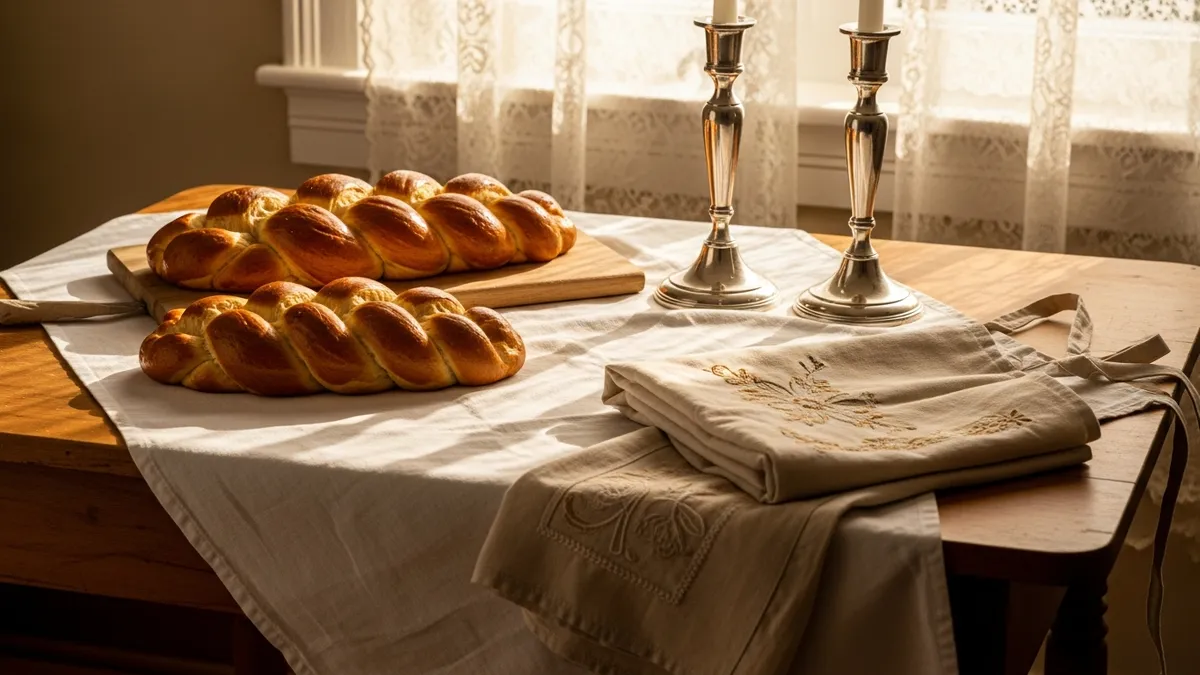
What life is really like for Hasidic women — their roles in the home and community, education, careers, dress, and the strengths that outsiders rarely see.
Quick Answer
Hasidic women are the backbone of their communities. They manage households, raise large families, and many are the primary breadwinners while their husbands study Torah. They are educated in Bais Yaakov schools and seminaries, work as teachers, therapists, nurses, and business owners, and run extensive chesed (charity) networks. Their lives are governed by modesty laws, family purity practices, and deep religious commitment — but they are far from the passive figures that media portrayals suggest.
I am a Hasidic woman, so I can tell you right now — the version of us you see in documentaries and Netflix shows is almost always wrong. (Hasidic women are a specific slice of the broader Orthodox Jews world — if you are starting from scratch, that piece gives you the foundation.) Not wrong in every detail, but wrong in the framing. They show the restrictions. They show the rules. What they miss is the strength, the competence, the humor, and the quiet authority that Hasidic women carry every single day. Let me give you the real picture.
Roles and Responsibilities
In Hasidic life, the home is not considered a lesser domain — it is the center. And the woman is the one who runs it.
A Hasidic mother manages a household that often includes six, eight, or ten children. She handles the cooking, the schedules, the homework, the doctor's appointments, the clothing, and the emotional temperature of the entire family. On Erev Shabbos, she is the one transforming a regular Friday into something sacred — the house is cleaned, the food is prepared, the candles are lit. The atmosphere she creates is what her family steps into when the week ends.
But "homemaker" does not capture it. In many Hasidic families, especially in the years when a husband is learning full-time in kollel, the wife is also the primary earner. She works, she earns, she manages the budget — and she does it while raising a large family. This is not seen as a burden forced upon her. In the Hasidic worldview, supporting a husband's Torah learning is one of the highest spiritual accomplishments a woman can achieve.
Education
Hasidic girls attend Orthodox girls' schools. In many communities these belong to the Bais Yaakov network founded in 1917 by Sarah Schenirer in Kraków, Poland, while several of the largest Hasidic groups run their own school systems — Satmar's Bais Rochel, for example, alongside the Bobov, Belz, and Vizhnitz networks. Schenirer recognized that Jewish girls needed formal Torah education, and the movement she created became one of the most important developments in modern Orthodox Jewish life.
In these schools, girls study Chumash (the Five Books of the Torah), Navi (Prophets), halacha (Jewish law), and Jewish history, alongside a secular curriculum — math, science, English, and social studies. The secular studies are often more rigorous than what Hasidic boys receive, because the practical assumption is that many women will need professional skills — though the depth of secular studies varies widely between groups, and in the more insular communities it stays fairly basic.
After high school, many Hasidic young women attend seminary — a one- or two-year program that deepens their Torah knowledge and prepares them for married life. Some seminaries also offer professional certifications in teaching, special education, or bookkeeping.
In recent years, more Hasidic women have pursued higher education through programs designed for the community — earning degrees in nursing, occupational therapy, speech therapy, accounting, and computer science through colleges that offer separate classes and modified schedules.
Dress and Appearance
Hasidic women follow the laws of tznius (modesty) noticeably more strictly than most other Orthodox women — one of the clearest ways Hasidic life differs from the rest of the Orthodox world. Clothing covers the elbows, knees, and collarbone. Colors tend to be subdued — dark blues, blacks, and maroons are common, though this varies by community. Tight or attention-drawing clothing is avoided.
Married women cover their hair. In most Hasidic communities, this means wearing a sheitel (wig) in public, sometimes with a hat or snood on top. The practice varies between groups: in some of the more stringent communities a sheitel must be covered with a hat, or a tichel (headscarf) is worn instead of a wig. And in several Hungarian-origin Hasidic groups — Satmar most famously — the custom is to shave or closely crop the head beneath the covering, a practice that shocks outsiders but is considered the highest level of modesty within those communities.
The dress standards vary between Hasidic groups. A Chabad woman's wardrobe might look somewhat different from a Satmar woman's, but the underlying principles are the same: dignity, modesty, and a refusal to let physical appearance become the center of how a woman is perceived.
I know this is the part that gets the most attention from outsiders. And I understand why — it is visible and different. But I want you to think about it from our perspective: we do not dress this way because we are told to hide. We dress this way because we believe there is more to a woman than what she looks like.
Marriage and Family
Hasidic women marry young — typically between 18 and 22. The match is arranged through a shadchan (matchmaker), and the couple meets a handful of times before deciding whether to proceed. Both the young man and the young woman have the right to say no. Nobody is forced — this is a point I cannot emphasize enough.
Families are large. Children are considered a bracha (blessing) from G-d, and the mitzvah of pru u'rvu (be fruitful and multiply) is taken seriously. Having many children is celebrated, not tolerated. The community is structured to support large families — gemachs provide free baby clothing, strollers, and equipment, and neighbors routinely help each other with childcare.
Family purity (taharat hamishpacha) governs the intimate side of marriage. The laws of niddah require separation between husband and wife during and after the menstrual period, followed by immersion in a mikvah. These laws are deeply private, rarely discussed publicly, and central to Hasidic married life.
Work and Careers
The idea that Hasidic women do not work is simply false. Most do — and many of them work very hard.
The most common professions for Hasidic women include teaching (both Judaic and secular subjects), special education, speech therapy, occupational therapy, nursing, bookkeeping, and office administration. But the range has expanded significantly. There are Hasidic women running graphic design businesses, real estate offices, catering companies, photography studios, and online retail stores.
In communities like Borough Park and Williamsburg, women-owned businesses are a significant part of the local economy. The entrepreneurial spirit is strong — partly out of necessity (flexible hours that accommodate large families) and partly out of sheer competence.
What you will not find many Hasidic women doing is working in environments that conflict with their religious standards — mixed-gender workplaces with immodest dress codes, jobs that require Shabbos work, or positions in industries that contradict Torah values. The boundaries exist, but within them, the range is wide.
Social Life and Community
Hasidic women's social lives revolve around community, family, and chesed (acts of kindness).
Women gather for simchas — weddings, bar mitzvahs, sheva brachos (post-wedding celebrations), vorts (engagement parties), and kiddushes after Shabbos davening. These events are gender-separated, which means the women's section is not a sideshow — it is its own world of conversation, connection, and celebration.
Chesed organizations run largely by women are the invisible infrastructure of Hasidic life. Women run bikur cholim (visiting the sick) committees, cook meals for families in crisis, organize clothing drives for families in need, and staff hotlines for women dealing with medical or emotional challenges. These are not casual volunteers — they are dedicated, organized, and relentless.
Women also connect through shiurim (Torah classes) given by rebbetzins (rabbis' wives) and other learned women. Phone-based shiurim and WhatsApp groups have expanded the reach of women's Torah learning dramatically.
What Outsiders Get Wrong
"Hasidic women are oppressed." This is the big one. I understand why it looks that way from the outside — the covered hair, the large families, the arranged marriages, the gender separation. But oppression means having no choice, no voice, and no power. Hasidic women have all three. They choose this life, many with fierce pride. They have enormous influence within the family and community. And they exercise real power — financial, social, and spiritual — even if it does not look like what the secular world recognizes as "empowerment."
"They have no education." Hasidic women are often better educated than Hasidic men in secular subjects. The Bais Yaakov system provides a solid academic foundation, and increasing numbers of women pursue college degrees and professional certifications.
"They are stuck at home with no ambitions." Running a household with eight children, holding a job, managing the family finances, and volunteering for chesed organizations is not a life without ambition. It is a life with different priorities — and it takes extraordinary skill.
"They have no fun." Hasidic women laugh, gossip, celebrate, travel (within community norms), and enjoy life. The idea that modesty and joy are incompatible says more about the assumptions of the person asking than about the reality of how we live.
Common Questions
Do Hasidic women work outside the home? Most do, especially while their husbands are in kollel. Teaching, healthcare, and business are the most common fields.
Can Hasidic women drive? In most Hasidic communities in America, yes. Women drive, shop, take children to school, and commute to work. Some very insular communities discourage it, but driving is common.
Do Hasidic women study Torah? Yes — Chumash, Navi, halacha, and hashkafa (Jewish philosophy). Gemara (Talmud) study is generally reserved for men in Hasidic communities, though this is a topic of ongoing discussion in the broader Orthodox world.
Can Hasidic women choose not to marry? Marriage is very strongly expected in Hasidic communities. Remaining single by choice would be extremely unusual and socially difficult. The community is built around family life, and a woman who does not marry faces significant social isolation.
Do Hasidic women ever leave the community? Some do. It is painful for everyone involved — the woman, her family, and the community. But it happens, and it is a reality that the community is learning to face more openly.
I write about my community because I believe the real story is more interesting and more admirable than the caricature. Hasidic women are not victims. We are mothers, professionals, leaders, and builders. The world we live in has rules that most people reading this would find challenging — and we navigate them with a strength that I wish more people could see.
I'm an Orthodox Jewish woman from Brooklyn. I can't speak for every Orthodox Jew — when I write outside my experience, I say so.
Orthodox Jewish Women: Roles, Dress, and Daily Life
What Is a Hasidic Jew? An Insider's Guide to Hasidic Judaism
Why Do Orthodox Jewish Women Cover Their Hair?
Why Do Orthodox Jews Wear Wigs — and What Is a Sheitel?
Partway in, or just curious?
If you're in an interfaith relationship, have Jewish ancestry, or are quietly exploring deeper engagement, there's a separate page for you.
The Orthodox Insider
A new letter every Thursday, before Shabbos — plus an instant download of “10 Things Everyone Gets Wrong About Orthodox Jews” when you subscribe.
No spam, unsubscribe anytime.