Orthodox Jewish Sabbath Rules: What You Can't Do on Shabbat
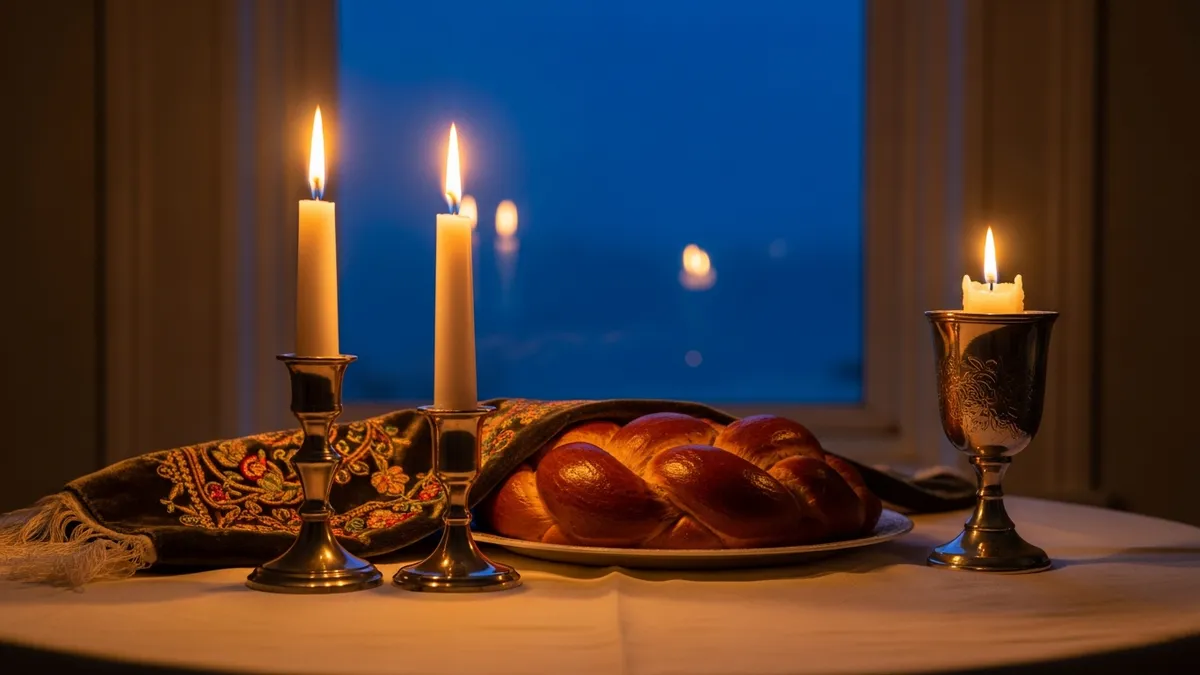
The complete list of Shabbat restrictions — what Orthodox Jews cannot do from Friday sunset to Saturday night, and the spiritual reasons behind each rule.
Quick Answer
On Shabbat (Friday sunset to Saturday nightfall), Orthodox Jews do not work, drive, use electronics, cook, write, carry in public, handle money, turn lights on or off, or do any of the 39 categories of creative work defined in the Talmud. The purpose is complete rest and spiritual renewal — acknowledging that G-d created the world in six days and rested on the seventh.
People ask me this question in different ways. "What can't you do on Saturday?" "Why can't you flip a light switch?" "Is it really true you can't drive?" The answer to all of these is yes — and the list is longer than most people expect. Shabbat is only one piece of the broader rules Orthodox Jews follow, though it is the piece people ask about most. But before I give you the list, I want you to understand something: these are not punishments. These are the rules of the most beloved day of our week.
Shabbat is not a day of restrictions. It is a day of freedom — freedom from the constant pressure to produce, consume, and be available. Every Orthodox Jew I know, without exception, would tell you that Shabbat is the highlight of their week. The "rules" are what make it possible.
The 39 Categories of Prohibited Work
The Talmud identifies 39 melachot — categories of creative work that were used to build the Mishkan (Tabernacle) in the desert. These are the activities prohibited on Shabbat. They include:
Agriculture: Plowing, sowing, reaping, threshing, winnowing, selecting, grinding, sifting, kneading, baking
Fabric work: Shearing, bleaching, combing, dyeing, spinning, warping, weaving, separating threads, tying, untying, sewing, tearing
Leather work: Trapping, slaughtering, skinning, tanning, smoothing, marking, cutting
Writing: Writing, erasing
Construction: Building, demolishing
Fire: Kindling, extinguishing
Finishing: The final hammer blow (completing a product)
Transport: Carrying from private to public domain
What This Means in Modern Life
These ancient categories translate into very specific modern prohibitions:
No driving. Starting a car ignites fuel (kindling fire) and completes electrical circuits. This is why Orthodox families walk to synagogue on Shabbat — and why they live within walking distance of one.
No cooking. All food is prepared before Shabbat. The Shabbat meals — and they are elaborate — are cooked on Friday and kept warm on a blech (metal sheet covering the stovetop) or a hot plate set before Shabbat.
No electronics. Switching on a light, phone, or computer is forbidden — for an incandescent bulb because heating the filament until it glows is a form of kindling, and for electronics generally because the poskim treat completing a circuit and bringing a device to life as creative acts that don't belong on Shabbat. TVs, computers, phones — all off for 25 hours. This is why some Orthodox Jews use flip phones — but on Shabbat, even those are off.
No writing. No pens, no typing, no signing documents. If a thought is important, you remember it until Shabbat ends.
No carrying in public. Without an eruv (a symbolic enclosure around a neighborhood), you cannot carry anything — keys, tissues, even a baby — in a public domain. This is why many Orthodox neighborhoods have an eruv.
No handling money. No buying, selling, or touching money. Everything needed for Shabbat is acquired beforehand.
No tearing. This includes tearing toilet paper (pre-cut tissues or pre-torn paper are used), opening packages, and ripping paper.
No selecting/sorting. Choosing good pieces from a mixture is a form of work. The details of this are complex — entire chapters of Talmud are devoted to the laws of borer (selecting).
What You CAN Do
Eat. Pray. Sleep. Read. Walk. Talk. Sing. Visit friends. Play board games. Study Torah. Hold your children. Sit in the garden. Nap. Have long, unhurried conversations. Think.
This is not a day of sitting in a dark room doing nothing. It is a day overflowing with activity — just a different kind of activity. The absence of work creates space for everything that matters most.
And when three stars appear in the Saturday night sky, we close the day the same way we opened it — with a blessing. Havdalah is a short ceremony over wine, spices, and a braided candle that marks the border between Shabbat and the new week.
The Emergency Exception
Jewish law is unambiguous: saving a life overrides Shabbat. If someone is in medical danger, you call emergency services, drive to the hospital, do whatever is necessary. This principle — pikuach nefesh — is one of the most fundamental in Judaism. An Orthodox Jew who hesitates to break Shabbat to save a life is violating, not fulfilling, Jewish law.
Common Questions
What if I accidentally turn on a light? You leave it on until Shabbat ends. You do not turn it off (extinguishing is also prohibited). Timers set before Shabbat can handle lights automatically.
Can you use a Shabbat elevator? Yes — elevators programmed to stop on every floor automatically require no button-pressing. They are common in hospitals and apartment buildings in Orthodox areas.
What do you do if something urgent happens at work? It waits. Shabbat is non-negotiable. Most Orthodox professionals set expectations with their employers — workplace accommodation for Shabbat is standard and legally protected.
Is Shabbat the same for all Orthodox Jews? The 39 melachot are universal. What varies is the level of community custom around the edges — how to handle electronic key cards, whether a blech is used or a hot plate, specific food traditions. The core restrictions are the same from Modern Orthodox to Hasidic.
Do children have to follow all the rules? Children are gradually trained in Shabbat observance from a young age. Very young children are not bound by halacha, but by age 12-13 (bat/bar mitzvah), they are fully obligated.
I'm an Orthodox Jewish woman from Brooklyn. I can't speak for every Orthodox Jew — when I write outside my experience, I say so.
Shabbat — The Jewish Day of Rest Explained
The 39 Melachot: What Can't You Do on Shabbat?
Why Don't Orthodox Jews Use Electricity on Shabbat?
What Do Orthodox Jews Do on Shabbat?
Want to experience a Jewish holiday yourself?
Virtual Seders, Rosh Hashanah dinners, and Chanukah candle-lightings are open to non-Jewish guests.
The Orthodox Insider
A new letter every Thursday, before Shabbos — plus an instant download of “10 Things Everyone Gets Wrong About Orthodox Jews” when you subscribe.
No spam, unsubscribe anytime.