Jews in New York City: Population, Neighborhoods & History
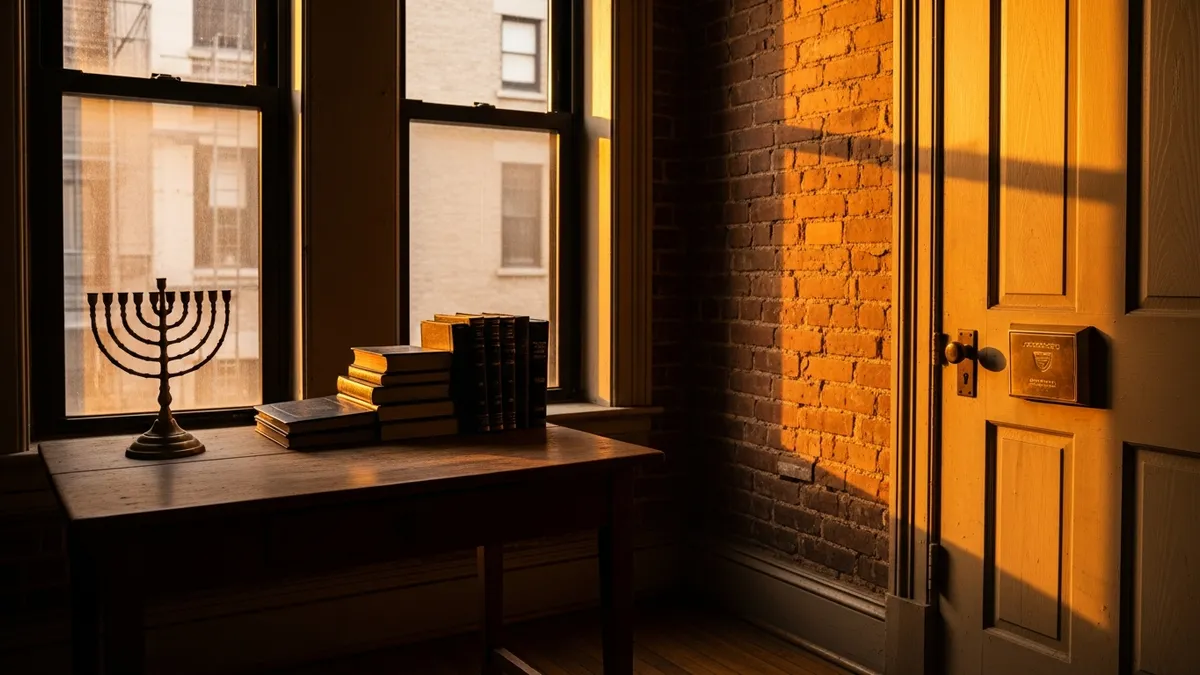
How many Jews live in New York City, where they live, and how it became the largest Jewish community outside Israel — a Brooklyn native's guide.
Quick Answer
Approximately 1.4 million Jews live in the New York City metropolitan area, making it the largest Jewish community outside of Israel. Brooklyn alone has more Orthodox Jews than most countries. Major Jewish neighborhoods include Borough Park, Williamsburg, Crown Heights, and Flatbush in Brooklyn, the Upper West Side and Washington Heights in Manhattan, Kew Gardens Hills in Queens, and Riverdale in the Bronx.
I was born in Brooklyn. My parents were born in Brooklyn. My grandparents came to Brooklyn from Europe after the war, and they never left. When people ask me what it is like to be Jewish in New York, I sometimes have to remind myself that most Jews in the world do not live like this — surrounded by kosher restaurants on every block, shuls on every corner, and the sound of Yiddish on the street. New York is not normal. It is extraordinary.
How Many Jews Live in New York City?
The most recent population studies estimate roughly 1.4 million Jews in the New York metropolitan area. The city proper — the five boroughs — is home to about 960,000. To put that in perspective, that is more Jews than in the city of Tel Aviv proper, more than in all of France, and more than in all of the United Kingdom.
The Orthodox community makes up a growing share of that number. While non-Orthodox Jewish populations have been relatively stable or declining, the Orthodox population — particularly the Haredi community — has been growing rapidly. High birth rates and strong community retention mean that Orthodox Jews now represent roughly a third of New York's Jewish population, and the share is growing — among Jewish adults under 30, the Orthodox proportion is approaching 40%.
Brooklyn: The Heart of Jewish New York
If New York is the capital of the Jewish diaspora, Brooklyn is its beating heart. More Orthodox Jews live in Brooklyn than in any other place on earth outside of Israel.
Borough Park
Borough Park is the largest Orthodox neighborhood in America. Walking down 13th Avenue on a Friday afternoon, you will see hundreds of families preparing for Shabbos — women pushing double strollers loaded with grocery bags, men hurrying home from work, bakeries selling fresh challah. The community here is predominantly Hasidic — Bobov, Belz, Ger, Vizhnitz, and Munkacz all have significant presences. But there is also a large Yeshivish population and a growing Sephardic community.
Williamsburg
Williamsburg is the stronghold of the Satmar Hasidim, the largest single Hasidic group in the world. South Williamsburg — below the bridge — is almost entirely Hasidic. The streets feel like a different century: Yiddish is the primary language, the dress code is strict and distinctive, and the community is extraordinarily tight-knit. In recent years, gentrification has pushed into North Williamsburg, creating one of the more surreal cultural contrasts in America — hipster coffee shops and Hasidic shtiblech sharing the same zip code.
Crown Heights
Crown Heights is the world headquarters of Chabad-Lubavitch, centered around 770 Eastern Parkway — the address so iconic it is simply called "770." The Lubavitcher Rebbe, Rabbi Menachem Mendel Schneerson, led the movement from here until his passing in 1994. Today, Crown Heights has a vibrant Chabad community alongside a large Caribbean population, making it one of Brooklyn's most culturally diverse neighborhoods.
Flatbush and Midwood
Flatbush is home to a massive Syrian Jewish community — Sephardic Jews whose families came from Aleppo and Damascus in the early 1900s. The Syrian community has its own synagogues, schools, social clubs, and business networks. Every summer, much of the community decamps to Deal, New Jersey — the Jersey Shore town that has served as the Syrian community's summer home for generations. Midwood, adjacent to Flatbush, has a mix of Yeshivish and Modern Orthodox families, plus a growing Bukharian Jewish population from Central Asia. The flagship yeshiva here is Torah Vodaath, founded in 1918 in Williamsburg and now based in this area.
Manhattan
Upper West Side
The Upper West Side has long been the center of Modern Orthodox life in Manhattan. Lincoln Square Synagogue, the Jewish Center, and Congregation Ohab Zedek anchor a community of professionals, young families, and singles. The neighborhood is walkable on Shabbos, filled with kosher restaurants, and home to several well-known Jewish day schools.
Washington Heights
"The Heights" was once the landing spot for German Jewish refugees in the 1930s and 40s. Yeshiva University — the flagship institution of Modern Orthodox Judaism — sits on its hilltop campus here, and the neighborhood retains a strong Jewish student and young professional presence. Breuer's Congregation, a bastion of German-Jewish (Yekkish) tradition, still maintains its distinctive minhagim.
Lower East Side
The Lower East Side is where the story began for millions of American Jews. Between 1880 and 1920, waves of Eastern European Jewish immigrants packed into the tenements south of Houston Street. At its peak, the Lower East Side was home to over 500,000 Jews. Today, only a handful of shuls and landmarks remain — the Eldridge Street Synagogue (now a museum), Katz's Delicatessen, and a few old-school Judaica shops. The Jewish population has largely moved on, but the history is everywhere.
Queens, the Bronx, and Staten Island
Kew Gardens Hills (Queens)
Kew Gardens Hills is a quiet, tree-lined Modern Orthodox and Bukharian neighborhood near Queens College. The community is observant, family-oriented, and more affordable than most of Brooklyn or Manhattan. Several shuls and a strong eruv make it a popular choice for Shabbos-observant families.
Riverdale (Bronx)
Riverdale is home to a well-established Modern Orthodox community. The Hebrew Institute of Riverdale (HIR) and the Riverdale Jewish Center serve a diverse Jewish population. SAR Academy, a prominent Modern Orthodox day school, is located here.
Staten Island
Staten Island has a smaller but stable Orthodox presence, with Young Israel of Staten Island and several smaller shuls serving the community.
Beyond the City: The Greater Metro Area
Lakewood, New Jersey
Lakewood deserves its own mention. What was once a small resort town has become the largest yeshiva community in America, centered around Beth Medrash Govoha (BMG), founded by Rav Aharon Kotler in 1943. BMG now has over 7,000 students, and the surrounding community has exploded — Lakewood's Orthodox population is estimated at over 100,000 and growing fast.
Monsey and New Square (Rockland County, NY)
Monsey is a sprawling Haredi suburb about 30 miles north of the city. It is home to a mix of Hasidic and Yeshivish families. New Square, a nearby village, is an exclusively Skverer Hasidic community — one of the few places in America that functions as a self-contained Hasidic town.
The Five Towns (Long Island)
The Five Towns — Lawrence, Cedarhurst, Woodmere, Hewlett, and Inwood — are an affluent Modern Orthodox corridor on Long Island's south shore. The community supports multiple shuls, day schools, and a dense kosher restaurant scene.
How New York Became the Jewish Capital
The story starts with immigration. Between 1880 and 1924, roughly 2.5 million Eastern European Jews came to America, the vast majority through Ellis Island. New York was the port of entry, and for many families, it became the permanent home. They settled on the Lower East Side, then spread to Brooklyn, the Bronx, and eventually the suburbs.
After World War II, Holocaust survivors arrived — many of them Hasidic Jews who rebuilt their shattered communities from scratch in Brooklyn. The Satmar Rebbe came to Williamsburg. The Lubavitcher Rebbe established his headquarters in Crown Heights. Bobover Hasidim settled in Borough Park. These were not just immigrants starting over — they were leaders reconstructing entire worlds.
Today, the result of these overlapping waves is a Jewish community of staggering diversity: Ashkenazi and Sephardic, Hasidic and Yeshivish and Modern Orthodox, Israeli expats and Russian immigrants and Persian Jews and Bukharian Jews, all sharing a city.
What Makes Jewish New York Unique
There is something about the density of Jewish life here that changes the experience entirely. In most American cities, being observant means being different — you are the only family in the neighborhood that does not drive on Saturday, the only kid in school who cannot eat the birthday cake. In New York, being frum is normal. Kosher restaurants are everywhere. Your employer has probably heard of Yom Tov. The city shuts down public schools for Rosh Hashanah and Yom Kippur.
This normalization matters more than people realize. It means that Orthodox families can live fully religious lives without constant friction. It means children grow up seeing their traditions reflected in the world around them. And it means that the Jewish community here has the critical mass to build institutions — schools, hospitals, chesed organizations, courts — that smaller communities simply cannot sustain.
Common Questions
What percentage of New York City is Jewish? Jews make up roughly 11-12% of New York City's population — about 960,000 out of 8.3 million residents. In some Brooklyn neighborhoods, the percentage is dramatically higher.
Which borough has the most Jews? Brooklyn, by a significant margin. Estimates put Brooklyn's Jewish population at over 500,000, with the Orthodox community making up the majority.
Is New York the most Jewish city in the world? By raw numbers, the New York metro area has roughly the same Jewish population as the Tel Aviv metro area — both around 1.4 million. By percentage, Jerusalem (about 60% Jewish) and Bnei Brak (almost entirely Jewish) rank higher.
Are the Jewish neighborhoods safe to visit? Yes. Orthodox neighborhoods like Borough Park and Kew Gardens Hills are among the safest in the city. Visitors are welcome — just be respectful of local customs, especially on Shabbos. Modest dress is appreciated in Hasidic areas.
Is the Jewish population in New York growing or shrinking? The Orthodox population is growing rapidly. The non-Orthodox population has been relatively flat. Overall, New York's Jewish population has remained large and stable, with the Orthodox share increasing every year.
I have lived in this city my entire life, and I still discover something new about Jewish New York every week — a shul I never knew existed, a community I had not encountered, a piece of history hiding in plain sight. This city has been home to Jews for over 350 years, and every generation adds another layer to the story.
I'm an Orthodox Jewish woman from Brooklyn. I can't speak for every Orthodox Jew — when I write outside my experience, I say so.
Orthodox Jewish Neighborhoods in America: Where & Why
What Is a Hasidic Jew? An Insider's Guide to Hasidic Judaism
How Many Orthodox Jews Are There?
Do Orthodox Jews Go to College?
Partway in, or just curious?
If you're in an interfaith relationship, have Jewish ancestry, or are quietly exploring deeper engagement, there's a separate page for you.
The Orthodox Insider
A new letter every Thursday, before Shabbos — plus an instant download of “10 Things Everyone Gets Wrong About Orthodox Jews” when you subscribe.
No spam, unsubscribe anytime.