Interesting Facts About Judaism You Probably Didn't Know
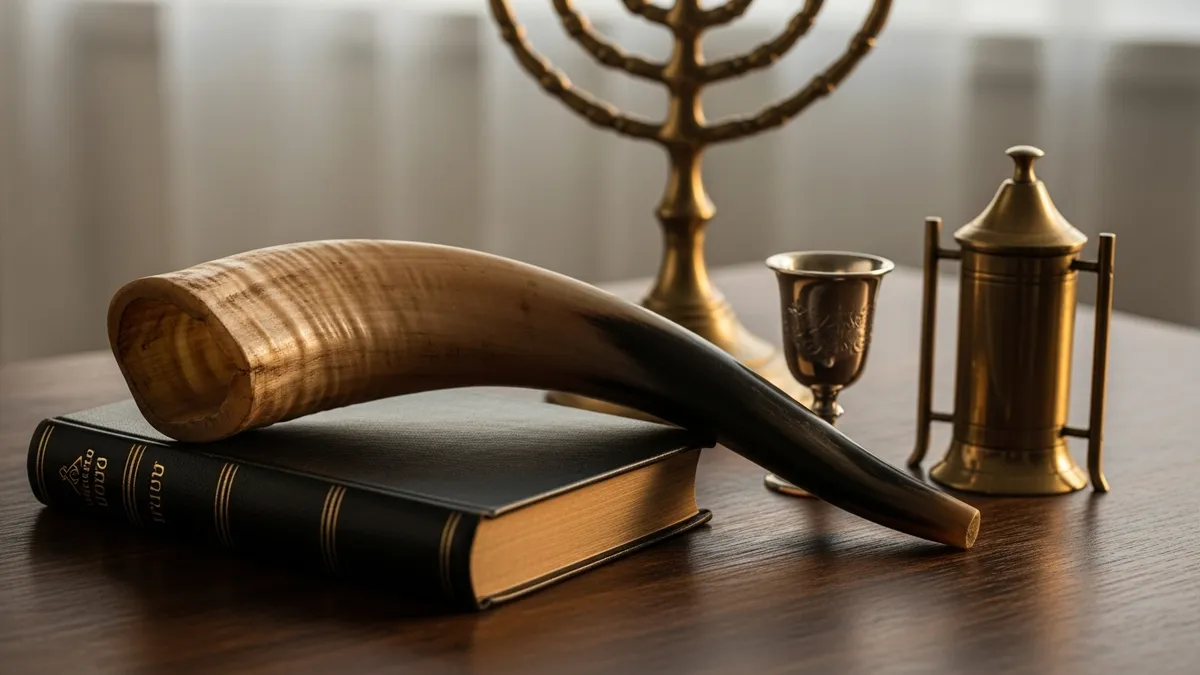
Fascinating facts about Judaism, from 613 commandments and a moon-and-sun calendar to the only ancient language ever fully revived as a modern tongue.
Quick Answer
Judaism is the oldest of the three Abrahamic religions, with roots going back nearly 4,000 years. It has 613 commandments (not just 10), its calendar follows both the moon and the sun, and Hebrew is the only ancient language ever fully revived as a modern spoken tongue. Jewish law covers everything from what you eat to what you say about other people.
People come to me with all kinds of questions about Judaism, and some of the most enjoyable conversations happen when someone says, "Wait — really? I had no idea." Judaism is old, deep, and full of details that surprise even people who think they know the basics. Here are some of the ones I love sharing.
1. There Are 613 Commandments, Not Just 10
Most people know the Ten Commandments. What they do not know is that the Torah contains 613 mitzvos (commandments) in total — 248 positive commandments (things to do) and 365 negative commandments (things to avoid). They cover everything from "love your neighbor as yourself" to the specific dimensions of the Temple menorah. The Rambam (Maimonides) famously enumerated all 613 in his Sefer HaMitzvos.
Not all 613 can be observed today. Many relate to the Temple in Jerusalem, which was destroyed nearly 2,000 years ago, and to agricultural laws that apply only in the Land of Israel. But the ones that can be observed — Shabbos, kashrus, prayer, tzedakah, family purity — are observed every single day.
2. The Jewish Day Starts at Night
In the secular world, a new day starts at midnight. In Judaism, a new day starts at sunset. This is based on the Torah's description of creation: "And there was evening, and there was morning — one day" (Bereishis 1:5). Evening comes first. That is why Shabbos begins on Friday evening at sunset, not Saturday morning. And it is why all Jewish holidays start the night before.
3. Hebrew Was Dead for 2,000 Years — Then Came Back
Hebrew stopped being a spoken everyday language around the 2nd century CE, after the Roman exile. For nearly two millennia, it survived only as a language of prayer, Torah study, and scholarly writing. Then, in the late 1800s, a man named Eliezer Ben-Yehuda moved to what was then Ottoman Palestine and set out to revive Hebrew as a living, modern language. He raised his son as the first native Hebrew speaker in modern history. Today, over 9 million people speak Hebrew. It is the only example in human history of a dead language being fully revived.
4. The Torah Scroll Is Handwritten by a Single Scribe
Every Torah scroll used in a synagogue is written by hand — by a trained sofer (scribe) using a quill and special ink on parchment made from animal skin. A Torah scroll contains 304,805 letters, and if even one letter is written incorrectly, the entire scroll is considered invalid until it is corrected. The writing process takes about a year of full-time work. There are no printed Torahs in the synagogue. Never have been.
5. Jews Face Jerusalem When They Pray
During the Amidah — the central standing prayer recited three times daily — Jews face the direction of Jerusalem. If you are west of Jerusalem, you face east. If you are east, you face west. In Jerusalem itself, you face the Har HaBayis (Temple Mount). This practice goes back to King Solomon, who asked G-d to hear the prayers of those who pray toward the Temple (Melachim I 8:30).
6. Jewish Law Has an Entire System for Speech Ethics
Lashon hara — literally "evil tongue" — is the halachic prohibition against speaking negatively about another person, even if what you are saying is true. This is not just a nice suggestion. It is a full body of law with detailed rules: what counts as lashon hara, when exceptions apply (such as warning someone about a dishonest business partner), and what the consequences are. The Chofetz Chaim, Rabbi Yisrael Meir Kagan (1838–1933), wrote an entire book codifying these laws. In a world of social media and gossip, the idea that speech has legal and spiritual consequences is one of Judaism's most countercultural teachings.
7. The Hebrew Calendar Follows Both the Moon and the Sun
The Jewish calendar is lunisolar. Each month begins with the new moon (which is why months are roughly 29 or 30 days), but the calendar also keeps pace with the solar year by adding a leap month (a second Adar) seven times in every 19-year cycle. This ensures that Passover always falls in the spring and Sukkos always falls in the autumn, as the Torah requires. The math behind this system was worked out by Hillel II in the 4th century and has been remarkably accurate for over 1,600 years.
8. The Western Wall Is Not the Temple
This surprises many visitors to Jerusalem. The Kosel (Western Wall) is not part of the Temple itself. It is a retaining wall — part of the massive platform that King Herod built around the Temple Mount in the 1st century BCE to expand the plaza. The Temple stood on top of the platform and was destroyed by the Romans in 70 CE. The retaining wall survived. Jews pray there because it is the closest accessible point to where the Temple once stood, and tradition holds that the Divine Presence never fully departed from this spot.
9. Charity Is Not Optional — It Is a Legal Obligation
Tzedakah is often translated as "charity," but the Hebrew root is tzedek — justice. In Jewish law, giving to the poor is not an act of generosity. It is an obligation. The Rambam outlined eight levels of tzedakah, with the highest being helping someone become self-sufficient (giving them a job or a loan), and the lowest being giving unwillingly. Even a person who is themselves poor is required to give something.
10. The Community Recycles Kindness Through Gemachs
A gemach (short for gemilus chesed — acts of lovingkindness) is a free-loan society. In Orthodox communities, gemachs exist for almost everything you can imagine: wedding gowns, baby carriages, medical equipment, wigs, holiday decorations, tools, money for rent. There are estimated to be thousands of gemachs operating in Jewish communities worldwide. It is one of the most practical expressions of the Torah's emphasis on helping others — and it runs entirely on trust and community spirit.
11. Shabbat Has 39 Categories of Prohibited Work
The 39 melachos (categories of creative work) prohibited on Shabbos are derived from the types of work used to build the Mishkan (Tabernacle) in the desert. They include sowing, reaping, baking, weaving, writing, building, lighting a fire, and carrying in a public domain. Each category has subcategories and details that fill volumes of Talmudic discussion. This is why Orthodox Jews do not flip light switches on Shabbos — completing an electrical circuit is considered a form of "building" or "lighting a fire."
12. A Boy Becomes Obligated in Commandments at 13 — Automatically
A bar mitzvah is not a party. It is a legal status change. When a Jewish boy turns 13 (and a girl turns 12), they become a bar or bas mitzvah — literally "a son or daughter of the commandments." From that moment, they are fully responsible for observing the mitzvos. The celebration is optional. The obligation is automatic.
13. Jews Have Been Making Wine for Over 3,000 Years
Kosher wine has specific requirements — it must be produced and handled by Sabbath-observant Jews from the moment the grapes are crushed, unless the wine is mevushal (briefly heated), in which case the handling restriction is lifted and even a non-Jew may pour it. This rule goes back to concerns about wine used in idol worship. Despite (or because of) these restrictions, the kosher wine industry has exploded in quality. Israeli wineries are now winning international awards, and the old joke about Manischewitz being the only option has not been true for decades.
A Few More Quick Facts
- The longest word in the Torah has 10 letters: וּבְמִשְׁאֲרוֹתֶיךָ (u'v'mish'arosecha — "and in your kneading bowls," Shemos 7:28)
- Jews customarily do not write G-d's name in full in casual contexts — not because they are afraid of the name, but to avoid the name being discarded disrespectfully
- The Talmud — the primary record of rabbinic discussion — contains about 1.8 million words spread across 63 tractates
- The oldest known complete Torah scroll dates to approximately the 12th century and is housed in a museum in Bologna, Italy
- Keeping full Shabbat has never kept anyone from the top of a field — a U.S. senator, a Nobel laureate in economics, and a Pulitzer-winning novelist all did it while strictly observant; you'll meet them among the famous Orthodox Jews I've profiled
Common Questions
How old is Judaism? Judaism traces its origins to Avraham (Abraham), who lived roughly 3,800 years ago. The giving of the Torah at Sinai — the foundational event — is dated to approximately 1313 BCE in Jewish tradition.
How many Jews are there in the world? Approximately 15.7 million, making Judaism one of the smallest of the world's major religions — yet one of the most historically influential.
What is the most important thing in Judaism? Ask ten rabbis and you might get ten answers. But the Talmud records that when a non-Jew asked Hillel the Elder to teach him the entire Torah while standing on one foot, Hillel replied: "What is hateful to you, do not do to your neighbor. That is the whole Torah. The rest is commentary — go and learn it."
Judaism is not a religion that fits neatly into a paragraph or a list. But I hope some of these facts give you a sense of how rich and layered it is — and maybe send you down a few rabbit holes of your own.
See also: What Is Orthodox Judaism
I'm an Orthodox Jewish woman from Brooklyn. I can't speak for every Orthodox Jew — when I write outside my experience, I say so.
What Do Orthodox Jews Believe? Core Principles of Faith
Jewish Customs and Traditions: The Complete Guide
What is Orthodox Judaism? A Complete Guide
The Origin of Judaism: From Abraham to Today
Keep going.
What Orthodox Jews believe is one piece of the picture. The guided tour covers beliefs, practices, and daily life in order.
The Orthodox Insider
A new letter every Thursday, before Shabbos — plus an instant download of “10 Things Everyone Gets Wrong About Orthodox Jews” when you subscribe.
No spam, unsubscribe anytime.