Orthodox Jewish Rules for Women: Modesty, Prayer, Daily Life
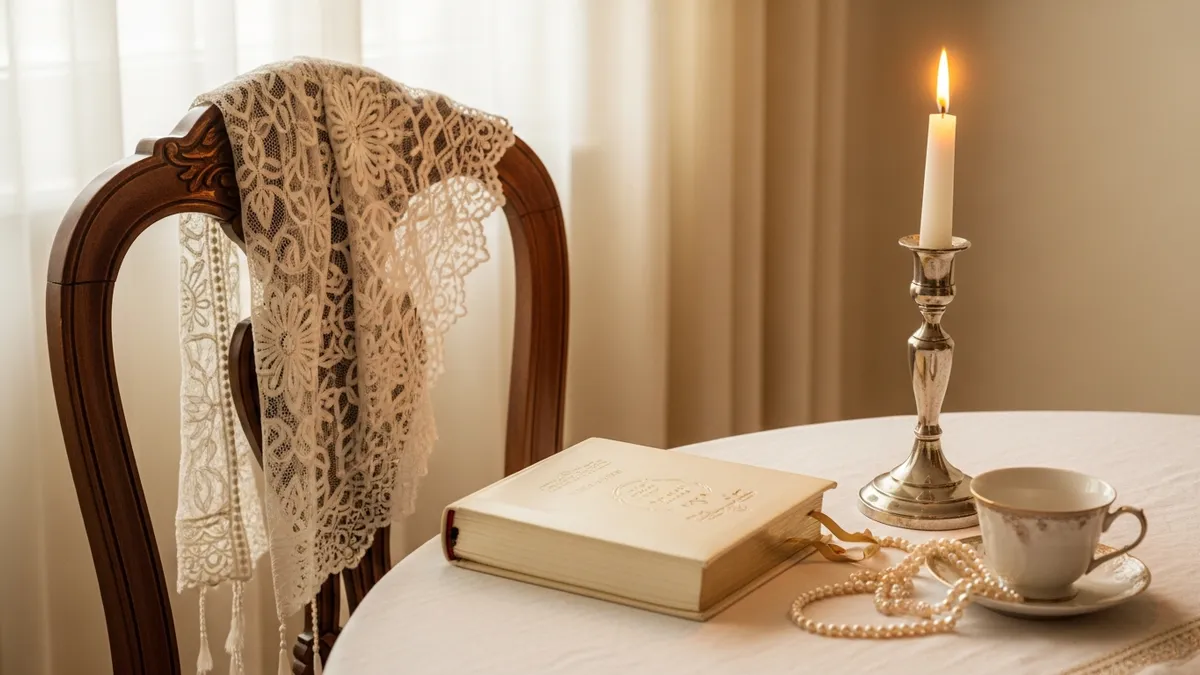
Orthodox Jewish women follow rules on modest dress, hair covering, prayer, Shabbat, and family purity. Here is what each one means and why it matters.
Quick Answer
Orthodox Jewish women follow halachic rules including modest dress (covering elbows, knees, and collarbone), hair covering after marriage, specific prayer obligations, Shabbat candle lighting, family purity laws (mikvah), and separating challah dough. These are not restrictions imposed on women — they are mitzvot (commandments) that women in the community embrace as expressions of dignity and spiritual purpose.
Let me start by saying something that might surprise you: the "rules" that Orthodox Jewish women follow are not experienced as a list of restrictions by most of the women who live them. They are experienced as a framework — a structure that gives daily life spiritual meaning and purpose. I know that sounds like something you say to make a hard sell, but I mean it. And by the time you finish this article, I hope you will understand why.
I am going to walk you through the main areas of halacha (Jewish law) that apply specifically to women, with honesty about both the beauty and the challenges.
The Three Mitzvot Given Specifically to Women
Jewish tradition identifies three commandments that are specifically designated for women:
1. Challah — Separating Dough
When making bread, a small piece of dough is separated and set aside. This goes back to the Torah's commandment to give a portion of bread to the priests (kohanim). Today, the separated piece is burned rather than eaten, but the act itself remains a meaningful ritual. In my kitchen, separating challah is one of the most spiritual moments of my week — especially on Fridays when I am baking for Shabbat. I say a bracha, pull off a small piece, and it reminds me that not everything I produce belongs to me. Some of it belongs to something higher.
2. Niddah — Family Purity
The laws of family purity (taharat hamishpacha) govern the intimate relationship between husband and wife. From the onset of menstruation until the woman has counted seven "clean" days after the flow has ended, physical contact between spouses is suspended. Only then does she immerse in a mikvah (ritual pool). These laws are deeply private, and most Orthodox women do not discuss them publicly — but they are considered among the most important in Jewish life.
3. Hadlakat Nerot — Lighting Shabbat Candles
Shortly before sunset on Friday — commonly eighteen minutes beforehand, though the exact time varies by community and city — the woman of the house lights the Shabbat candles and recites a blessing. I have written about this moment elsewhere, and I will say it again: it is the most powerful moment of my week. My hands circle the flame, I cover my eyes, and I pray for my family. Every Jewish woman I know treasures this moment — it is uniquely ours.
Modesty (Tznius)
Modesty in dress is one of the most visible aspects of Orthodox women's religious life:
- Elbows covered — sleeves to at least the elbow
- Knees covered — skirts or dresses that cover the knee, even when sitting
- Collarbone covered — no low necklines
- Married women cover their hair — with a wig (sheitel), scarf, or hat
Within these guidelines, there is enormous room for personal style. The Orthodox modest fashion industry has exploded in recent years. The women in my community are stylish, put-together, and creative with their clothing. Tznius is not about being invisible — it is about choosing what to reveal and what to keep private.
I will be honest — modesty rules can feel limiting sometimes, especially in summer heat or when you see a beautiful dress that does not meet the guidelines. But the underlying principle — that a person's worth is not determined by how much skin they show — resonates with me more deeply as I get older.
Prayer
Women's prayer obligations differ from men's in several important ways:
- Women are exempt from time-bound positive commandments (mitzvot asei shehazman graman). The reasoning is often explained practically — historically, women's responsibilities (nursing, childcare) made fixed-schedule obligations difficult. How this applies to daily prayer is itself a machlokes (dispute): many poskim hold women are obligated to pray at least once a day, and some require both Shacharit and Mincha. In practice, though, women generally pray with more flexibility on timing than men.
- Most women do pray daily, but with more flexibility on timing. Many women say the morning Shema and Shemoneh Esrei (the central prayer) and various blessings throughout the day.
- Women do not wear tefillin or tallit (though some Modern Orthodox women have adopted these practices, which is controversial).
- Women do not count toward a minyan (the quorum of ten needed for certain prayers).
- Women sit in a separate section in the synagogue, behind a mechitza (partition).
Shabbat and Holiday Roles
Women play central roles in Shabbat and holiday observance:
- Candle lighting — the woman's special mitzvah
- Preparing the Shabbat meals — a significant investment of time and love
- Creating the atmosphere — setting the table, arranging the home
- Havdalah — women listen to and participate in the ceremony marking the end of Shabbat
On holidays, women have specific roles: lighting Chanukah candles (in some traditions), preparing the Seder table, building and decorating the sukkah, and more.
Education and Intellectual Life
The idea that Orthodox women are uneducated is a myth that needs to die. Bais Yaakov schools (the primary girls' school system in Orthodox communities) provide rigorous education in both Jewish studies and secular subjects. Many Orthodox women hold advanced degrees, run businesses, and are leaders in their fields.
What is true is that women's Torah study focuses on different areas than men's. While men study Talmud extensively, women's religious education emphasizes halacha (practical Jewish law), Tanach (Bible), Jewish philosophy, and the laws that apply to their daily lives. This is not because women are considered intellectually incapable — it is a matter of communal tradition that is evolving in some communities.
Common Questions
Are Orthodox Jewish women oppressed? The women I know — including myself — would say emphatically no. Different does not mean lesser. Orthodox women have distinct roles that carry enormous respect and authority within the community. But I also acknowledge that experiences vary, and some women do struggle with certain aspects of the system.
Can Orthodox women drive? Yes. There is no prohibition on women driving (unlike in some other religious communities). Orthodox women drive, work, shop, and live fully modern lives within the framework of halacha.
Can Orthodox women sing in public? In most Orthodox communities, women do not sing in front of men who are not their husbands (this is called kol isha). Women sing freely in women-only settings, and Shabbat table singing with family is normal.
Do Orthodox women choose to follow these rules? Most women raised in Orthodox homes experience these practices as a natural part of life — they are not experienced as external impositions. Women who convert to Orthodox Judaism choose them consciously. In either case, the laws are observed because they are understood as divine commandments, not social conventions.
Where can I learn more about the role of women? Read about Orthodox Jewish women for a broader perspective, or explore why Orthodox women cover their hair for one of the most visible practices.
See also: Hasidic Women
See also: Orthodox Jewish Women
See also: Why Do Some Jewish Women Shave Their Heads
See also: Why Orthodox Jewish Women Cover Hair
See also: Why Orthodox Jews Separate Men Women
I'm an Orthodox Jewish woman from Brooklyn. I can't speak for every Orthodox Jew — when I write outside my experience, I say so.
Orthodox Jewish Women: Roles, Dress, and Daily Life
Why Do Orthodox Jewish Women Cover Their Hair?
Family Purity Laws (Taharat Hamishpacha)
Modest Fashion: A Complete Guide to Tznius Style
Partway in, or just curious?
If you're in an interfaith relationship, have Jewish ancestry, or are quietly exploring deeper engagement, there's a separate page for you.
The Orthodox Insider
A new letter every Thursday, before Shabbos — plus an instant download of “10 Things Everyone Gets Wrong About Orthodox Jews” when you subscribe.
No spam, unsubscribe anytime.